





What's Happening?
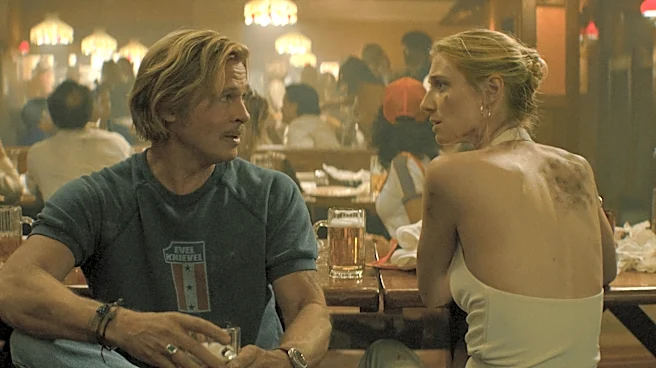
David Fincher's new Netflix film, 'The Further Mis-Adventures of Cliff Booth,' which is a sequel to Quentin Tarantino's 'Once Upon a Time… in Hollywood,' meticulously recreates Los Angeles as it appeared in 1977. The film, written by Tarantino, features
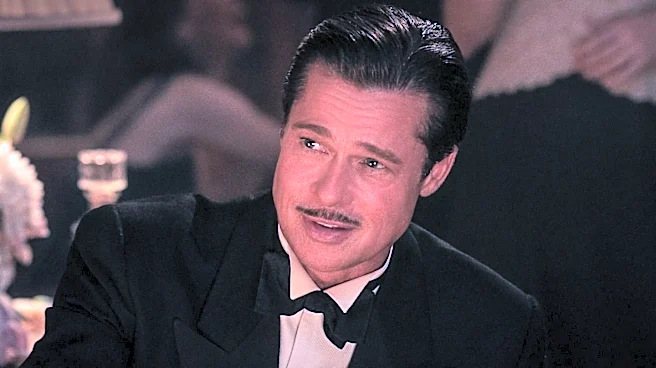
Brad Pitt reprising his role as Cliff Booth, an unflappable stuntman-turned-fixer. Supervising location manager Mandi Dillin, who also worked on 'MaXXXine,' was tasked with finding locations that had preserved their period authenticity or could be transformed to reflect the grittier side of 1977 Hollywood. This involved scouting for specific venues like a Shakey’s Pizza Parlor and a single-screen movie theater, often requiring creative adjustments to achieve the desired vintage look.
Why It's Important?
The detailed recreation of 1977 Los Angeles in 'The Further Mis-Adventures of Cliff Booth' is significant for its contribution to cinematic realism and historical preservation. It highlights the challenges filmmakers face in depicting a rapidly changing urban landscape and the dedication required to achieve period accuracy. For the film industry, this approach sets a high standard for production design and location scouting, influencing how historical settings are brought to life on screen. For audiences, it offers a nostalgic journey into a specific era of American culture and Hollywood history, potentially sparking interest in the social and architectural evolution of Los Angeles. The film's success in this regard could also draw attention to the few remaining historical venues in the city.
What's Next?
The film is set to open in IMAX theaters before its release on Netflix on December 23. Its detailed period setting will likely be a point of discussion among critics and audiences, particularly those familiar with Los Angeles history and the era depicted. The success of this historical recreation could influence future filmmaking trends, encouraging more meticulous attention to period details in productions. It may also inspire local tourism to the preserved or recreated locations featured in the film, as seen with other popular movies that showcase specific historical settings.
Beyond the Headlines
Beyond its entertainment value, the film's commitment to recreating 1977 Los Angeles serves as a cultural artifact, offering a glimpse into a bygone era. It implicitly comments on the transient nature of urban environments and the constant tension between modernization and historical preservation. The film's aesthetic choices, such as depicting a 'grittier' Hollywood, reflect a particular interpretation of the late 1970s, a period often characterized by significant social and cultural shifts in the U.S. This artistic decision can prompt deeper reflection on how historical periods are remembered and represented in popular culture, and how these representations shape collective memory.