
What's Happening?
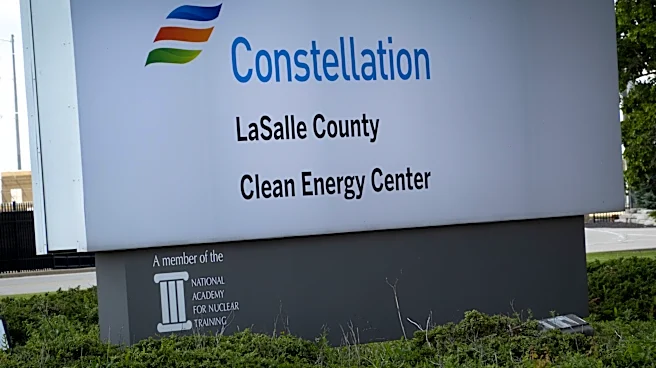
Constellation Energy, a major producer of clean energy, has finalized approximately 8,500 MW of long-term power agreements this year. These agreements include a significant 20-year, 690 MW deal with Amazon
at Calvert Cliffs and a contract with Google that facilitates roughly 890 MW of nuclear uprates. These strategic moves are part of Constellation's focus on securing higher-quality clean and contracted output. The company aims to have long-term agreements cover 45% of its clean baseload fleet by 2032, with CEO Joe Dominguez noting that nearly half of their clean output is now hedged for decades. This follows the company's recent sale of about 4.4 GW of natural gas generation in the PJM region to LS Power, a divestiture required due to its earlier Calpine acquisition. Constellation Energy currently trades at a P/E ratio of approximately 18.9x.
Why It's Important?
These long-term power agreements are crucial for Constellation Energy, providing stable revenue streams and reducing exposure to volatile energy markets. By hedging a substantial portion of its clean output for decades, the company enhances its financial predictability and strengthens its position as a reliable clean energy provider. The partnerships with major technology companies like Amazon and Google underscore the growing demand for clean energy to power data centers and AI infrastructure, highlighting a significant market opportunity for nuclear power. This trend could accelerate the transition to cleaner energy sources across the U.S. and influence investment in nuclear energy infrastructure. For investors, these contracts signal a robust growth trajectory and a secure dividend, positioning Constellation as a key player in the evolving energy landscape.
What's Next?
Constellation Energy's management is targeting a Base EPS growth of over 20% from 2026 to 2029, indicating a strong outlook for the company's financial performance. The company's strategy of securing long-term contracts for its nuclear fleet is expected to continue, further solidifying its revenue base. However, potential regulatory developments, particularly regarding PJM's rules for connecting large loads and FERC's actions on colocation, could influence the pace of future data-center deals. Management anticipates FERC to act on colocation in the first half of 2027. The ongoing demand for power from AI infrastructure is likely to drive further opportunities for Constellation, especially as more companies seek clean and reliable energy solutions.
Beyond the Headlines
The long-term contracts secured by Constellation Energy highlight a broader shift in the energy sector, where major corporations are increasingly prioritizing clean and reliable power sources for their operations. This trend is driven by corporate sustainability goals and the energy-intensive demands of emerging technologies like artificial intelligence. The emphasis on nuclear power in these agreements also points to a potential resurgence of nuclear energy as a critical component of the U.S. clean energy mix, offering a baseload power source that is both carbon-free and consistent. This could lead to increased investment in nuclear technology and infrastructure, potentially influencing energy policy and regulatory frameworks to support its expansion. The stability offered by these contracts also provides a model for other energy producers seeking to de-risk their operations in a rapidly changing energy market.