


What's Happening?
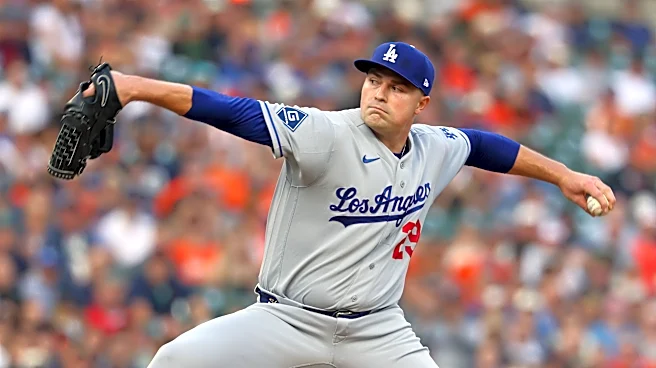
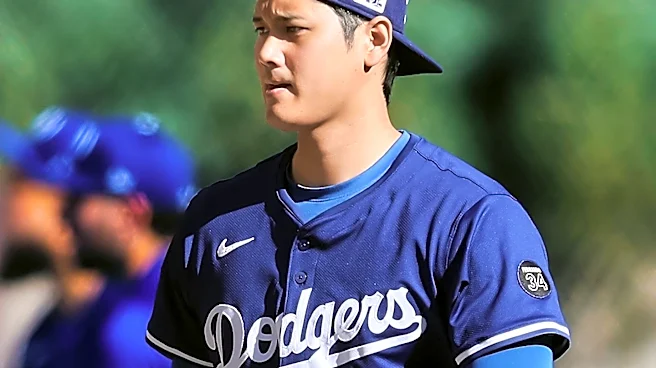
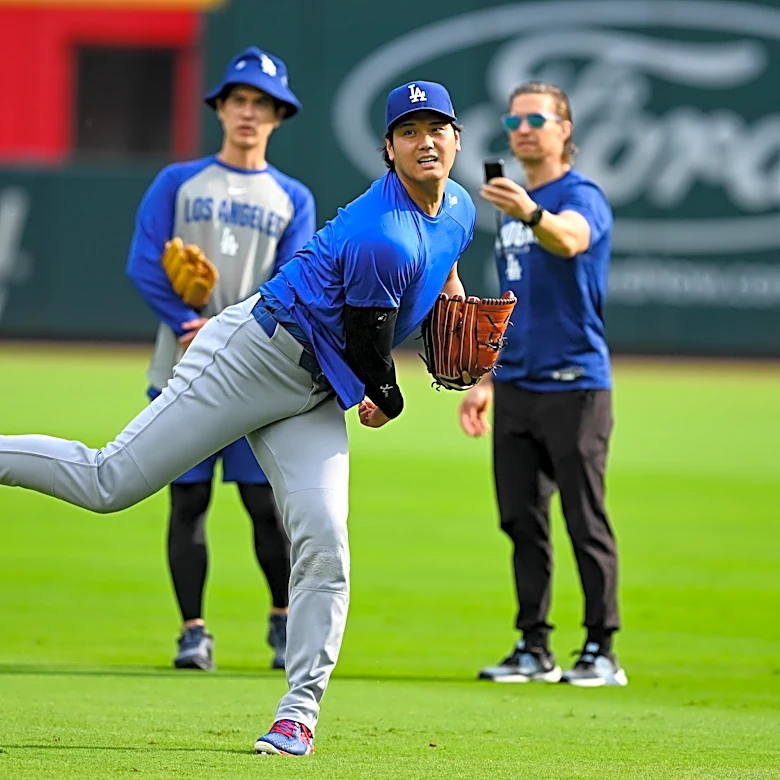
Los Angeles Dodgers manager Dave Roberts remains undecided on when Shohei Ohtani will make his next start, particularly regarding Sunday's series finale against the Detroit Tigers. Ohtani, who has been sidelined from pitching due to left knee inflammation
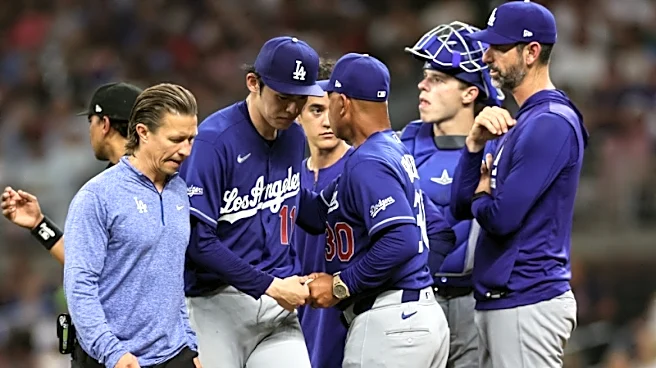
since July 3, threw a shorter-than-usual 20-pitch bullpen session on Friday. Roberts stated he had not yet watched the session or received feedback from Ohtani or pitching coach Mark Prior, making it difficult to draw immediate conclusions about his readiness. The team is prioritizing Ohtani's health and will assess his response to the bullpen session before making a decision. Ohtani has continued to play as the designated hitter, maintaining strong offensive performance with a .288 batting average, 30 home runs, and 80 RBIs.
Why It's Important?
The uncertainty surrounding Shohei Ohtani's return to the mound is significant for the Dodgers, as he is a critical two-way player whose pitching prowess is essential for their World Series aspirations. His earlier season performance as a pitcher, with a 1.79 ERA across 14 starts, highlights his impact. The cautious approach taken by Roberts and the Dodgers underscores the importance of managing high-value athletes, especially those recovering from injuries, to ensure their peak performance during the crucial postseason. This situation also reflects the delicate balance between a player's desire to return and the team's strategic long-term planning for health and success. The decision will impact the Dodgers' pitching rotation and their overall strategy as they head into the final stretch of the regular season.
What's Next?
Roberts plans to consult with Ohtani and pitching coach Mark Prior to gather feedback on the bullpen session and Ohtani's physical response before making a decision about his Sunday start. The Dodgers have maintained flexibility throughout Ohtani's recovery, allowing his physical condition to dictate his progression. If he does return to pitch, the team intends to ease him back, potentially starting him as an opener for a short inning before handing off to another pitcher. This gradual approach is designed to build him back to a traditional starter's workload by the playoffs, with a goal of reaching six innings in October. Another live session could precede his return if more work is deemed necessary.
Beyond the Headlines
The careful management of Shohei Ohtani's return from injury exemplifies the evolving strategies in professional sports regarding athlete health and performance optimization. The Dodgers' willingness to delay his return, even for a highly anticipated player, demonstrates a commitment to long-term success over short-term gains. This approach could set a precedent for how teams handle star players with unique skill sets, particularly those who excel in multiple demanding roles. It also highlights the complex decision-making process involved in balancing player well-being, team objectives, and fan expectations, especially when dealing with a player of Ohtani's caliber and marketability.