




What's Happening?
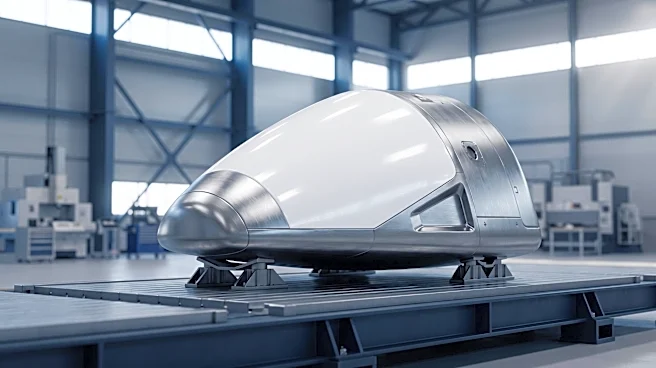
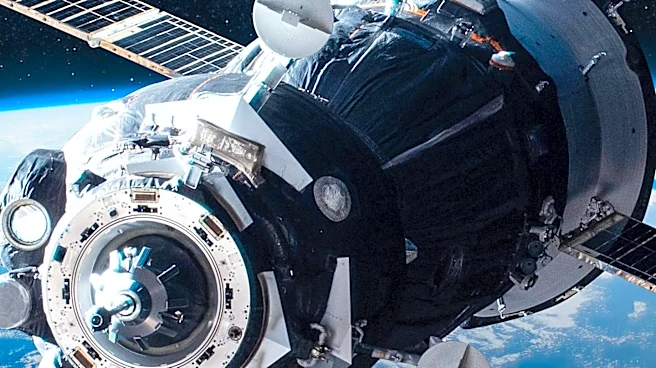
Vast, a space company, has successfully completed the pressure testing of Hull 3, a pathfinder version of the primary structure for its Haven-1 space station. This hull was built in five months at the company's Long Beach headquarters, four months faster
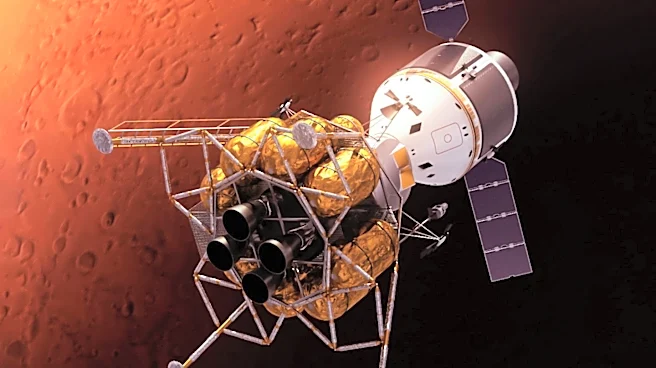
than the flight structure, Hull 2. CEO Max Haot stated that the total cost for Hull 3, including labor, materials, and testing, was under $4 million. Hull 3, a pressurized shell designed to house four astronauts for two-week missions, is 4.4 meters wide. The company's next goal is to produce a new hull in under three months, with Hull 4 already under construction. This rapid production is part of Vast's larger strategy to develop a multi-module space station intended to succeed the International Space Station (ISS). The launch of Haven-1 is currently slated for Q1 2027, a delay from its initial 2025 target.
Why It's Important?
This development is significant for the U.S. commercial space industry, demonstrating a potential for more cost-effective and rapid development of private space stations. Vast's ability to construct a space station hull for under $4 million and in a short timeframe could drastically reduce the financial and temporal barriers to entry for commercial space ventures. This efficiency could foster greater innovation and competition in the burgeoning space economy, potentially attracting more private investment and accelerating the development of new space technologies and services. The success of Haven-1 could establish a new model for space station construction, challenging traditional government-led approaches and opening up new opportunities for space tourism, research, and manufacturing. However, it's important to note that the $4 million cost only covers the bare structure, not essential life support, power, and electronics, which will add to the overall project cost.
What's Next?
Vast is currently working on Hull 4, aiming to complete it in under three months, indicating a push towards a production-line approach for space station components. The company is preparing Haven-1 for a Q1 2027 launch, a revised timeline from its original 2025 target. This accelerated development pace is also strategically timed, as proposals for NASA’s next commercial space station contract are due on December 8th. Vast's ability to demonstrate rapid and cost-effective hull production could strengthen its position in securing future NASA contracts, which are crucial for the long-term viability and expansion of commercial space stations. The next steps will involve integrating the life support, power, and electronics systems into the hull, which represents a significant portion of the overall project's complexity and cost.
Beyond the Headlines
The rapid and cost-effective construction of space station hulls by Vast could signal a paradigm shift in how space infrastructure is developed. By vertically integrating nearly every component in-house, Vast aims to achieve a fraction of the costs associated with traditional space station projects like the ISS. This approach could democratize access to space, making orbital platforms more accessible for a wider range of commercial and scientific endeavors. The emphasis on rapid iteration and in-house production also highlights a growing trend in the private space sector towards agile development methodologies, mirroring practices in other high-tech industries. If successful, this model could inspire other companies to adopt similar strategies, leading to a more dynamic and competitive commercial space ecosystem and potentially accelerating humanity's expansion into low Earth orbit and beyond.