

What's Happening?
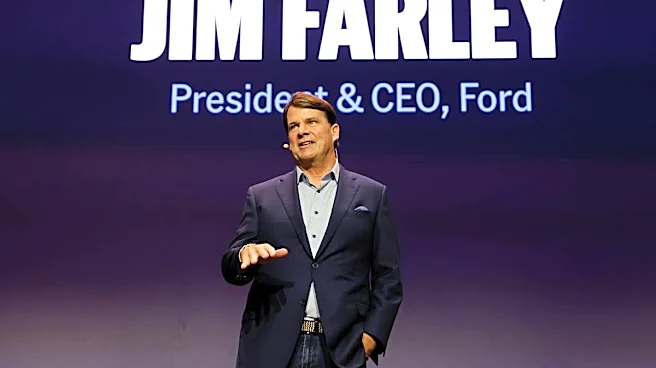
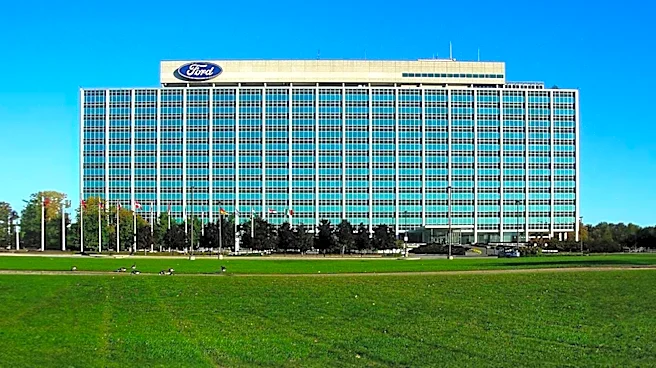
Ford CEO Jim Farley has been named 'Industry Leader of the Year' by Automotive News, an accolade that has drawn criticism from some observers. The recognition comes despite Ford's recent history of leading the U.S. auto industry in safety recalls and
facing challenges in the electric vehicle (EV) market. Farley's company is also reportedly in danger of losing its position as the third-largest U.S. sales podium to South Korea's Hyundai Motor Group. Automotive News cited Farley's vocal warnings about the 'existential threat' posed by China to domestic automakers and his strategy to counter it as key factors for the award. However, critics point to ongoing issues such as a recent recall of 40,000 late-model vehicles due to a contaminated LED chip, which will require costly headlight assembly replacements, further impacting Ford's warranty expenses.
Why It's Important?
The recognition of Jim Farley as 'Industry Leader of the Year' by Automotive News, juxtaposed with Ford's operational challenges, highlights a significant debate within the automotive industry regarding leadership effectiveness and the criteria for success. While Farley is lauded for his strategic vision and outspoken stance on geopolitical automotive threats, the company's performance in areas like product quality (indicated by recalls) and market competitiveness (threatened by Hyundai) presents a complex picture. This situation is important because it reflects the pressures U.S. automakers face in a rapidly evolving global market, particularly with the rise of EV technology and intense competition from international players. The award could be seen as an endorsement of a forward-looking, strategic approach, even if immediate operational results are mixed, or it could be viewed as overlooking critical performance metrics that directly impact consumers and the company's bottom line.
What's Next?
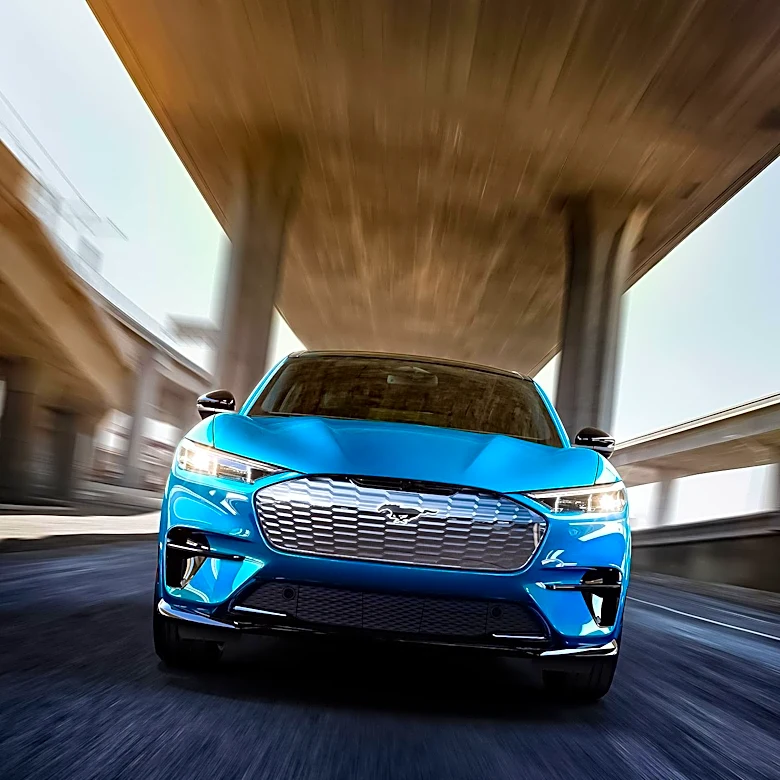
Following this recognition, Jim Farley and Ford will likely continue to emphasize their strategic initiatives, particularly in addressing the competitive landscape and advancing their electric vehicle plans. The company will need to demonstrate tangible progress in improving product quality and reducing recalls to mitigate ongoing criticism. Ford's efforts to launch its sub-$30,000 electric truck 'at scale, at cost, on time' will be a critical test of Farley's leadership and the company's execution capabilities. The ongoing competition with Hyundai Motor Group for market share will also be a key area to watch. The industry will be observing whether Farley's strategic vision translates into improved operational performance and sustained market leadership for Ford, especially as the transition to EVs accelerates and global competition intensifies.
Beyond the Headlines
The contrasting views on Jim Farley's leadership underscore a deeper tension in the automotive industry: the balance between visionary strategy and operational excellence. While strategic foresight, particularly in identifying and addressing global threats like Chinese competition, is crucial, the ability to execute on those strategies and deliver high-quality products remains paramount. The situation also brings to light the influence of industry publications in shaping narratives around corporate leadership. The debate over Farley's award reflects broader questions about how leadership is defined and celebrated in an era of rapid technological change and intense global competition. It also implicitly raises the question of whether the industry is sufficiently acknowledging leaders who are delivering tangible, high-volume, and cost-competitive solutions, such as Stella Li of BYD, who was recognized as World Car Person of the Year for her company's practical advancements in EVs and hybrid technology.