

What's Happening?
The Federal Communications Commission (FCC) has announced a ban on foreign-made power inverters, commonly used in solar panels, to prevent potential disruptions. This ban, effective immediately, targets new models while allowing existing inverters to continue
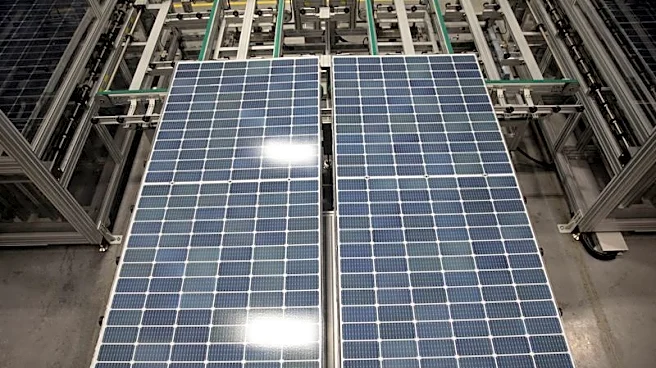
receiving software updates until January 1, 2029. The decision follows similar bans on foreign-made drones and Wi-Fi routers earlier this year. The FCC plans to revisit the issue in future rulemaking, potentially extending the deadline for software updates. Power inverters are crucial components of solar energy systems, converting direct current electricity from solar panels into usable alternating current. The ban has sparked concerns among consumers and industry experts about the long-term viability and security of existing inverters.
Why It's Important?
The ban on foreign-made inverters is significant as it aims to bolster domestic manufacturing and protect national security. However, it could lead to increased costs for solar energy systems in the U.S., as consumers may have to rely on more expensive domestic alternatives. The ban affects a substantial portion of the market, with Chinese vendors previously holding nearly 50% of the U.S. inverter market share. The move is intended to encourage investment in domestic production, but it may also limit access to affordable solar solutions, impacting the growth of renewable energy adoption in the U.S.
What's Next?
The FCC has established a process for temporary exemptions from the ban, but no major Chinese brands have received waivers yet. The agency's decision could lead to a shift in the market dynamics, with U.S. companies potentially gaining a larger share. However, the ban's impact on future product development remains uncertain, as manufacturers await clarity on policy changes. The FCC's actions may prompt companies to reconsider their supply chains and investment strategies, potentially leading to increased domestic production and innovation in the solar industry.
Beyond the Headlines
The ban raises ethical and security concerns, as it aims to prevent foreign entities from introducing vulnerabilities into the U.S. electric grid. The focus on domestic manufacturing could lead to a reevaluation of supply chain dependencies and encourage investment in local production capabilities. Additionally, the policy highlights the ongoing geopolitical tensions and the need for secure and reliable energy infrastructure. The long-term implications of the ban may include shifts in global trade relations and increased emphasis on cybersecurity in energy systems.