






What's Happening?
A growing body of research, including studies on 'vigorous intermittent lifestyle physical activity' and 'exercise snacking,' indicates that short, purposeful bursts of movement, typically one to five minutes long, can significantly improve cardiovascular
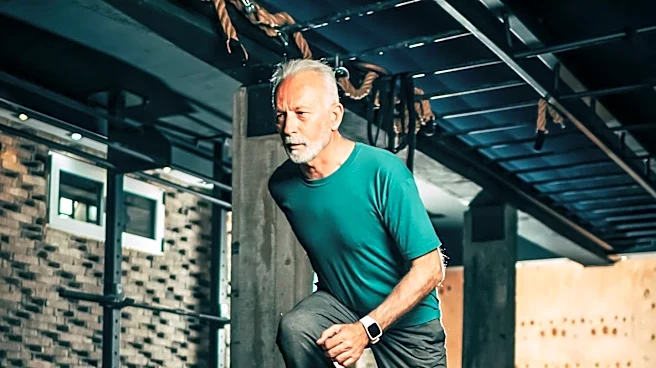
health and boost mood. These micro-workouts, such as quickly climbing stairs, a brisk uphill walk, or a few minutes of bodyweight exercises, are effective even for individuals who do not engage in formal workouts. The research also shows that just a few minutes of movement after a meal can blunt blood sugar spikes. The effectiveness of micro-workouts is attributed not only to physiological benefits but also to psychological factors, as they have a low barrier to entry and can be easily integrated into daily routines without requiring significant time commitment or preparation.
Why It's Important?
This research has significant implications for public health in the U.S., offering a practical and accessible solution to combat sedentary lifestyles. Many Americans struggle to meet recommended physical activity guidelines due to time constraints or lack of motivation for traditional longer workouts. Micro-workouts provide an alternative that can be easily incorporated into busy schedules, potentially leading to widespread improvements in cardiovascular health, blood sugar regulation, and mental well-being across the population. This approach could empower individuals who feel overwhelmed by the prospect of formal exercise to start moving, thereby reducing the burden of chronic diseases associated with inactivity and improving overall quality of life.
What's Next?
The findings suggest a shift in how physical activity is perceived and promoted. Health organizations and wellness programs may increasingly advocate for the integration of micro-workouts into daily life. Individuals are encouraged to identify opportunities for short bursts of movement, such as performing squats while waiting for coffee or taking brief stretch breaks during work. Technology, such as fitness apps, could further facilitate this by offering guided micro-workout sessions. The focus will be on building habits by attaching these short movements to existing routines, making physical activity a more seamless and less daunting part of everyday life. Further research may explore the long-term effects and optimal implementation strategies for micro-workouts across diverse populations.
Beyond the Headlines
The power of micro-workouts extends beyond physical health, touching upon the psychological barriers to exercise. By demonstrating that significant benefits can be achieved through minimal time investment, this research challenges the 'all-or-nothing' mentality that often prevents people from engaging in any physical activity. It promotes a more forgiving and sustainable approach to fitness, fostering a sense of accomplishment and reducing feelings of guilt associated with missed longer workouts. Culturally, it could lead to a normalization of movement throughout the day, transforming environments like workplaces and homes into more active spaces. This shift could also influence urban planning and architectural design to incorporate more opportunities for incidental physical activity, such as accessible stairwells and walking paths.