








What's Happening?
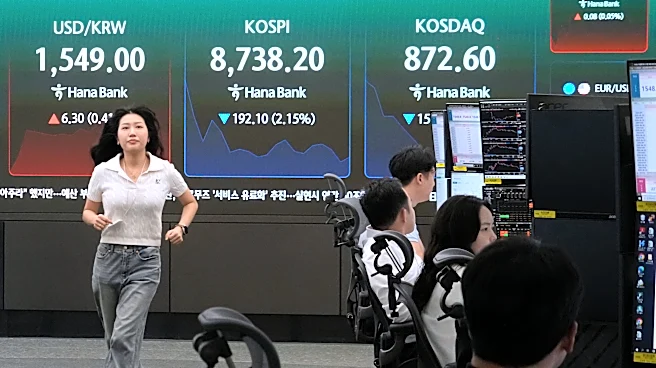
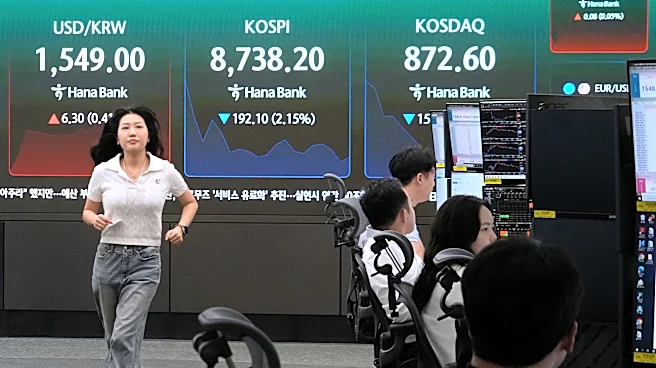
Asian markets experienced mixed outcomes on Monday, with significant declines in tech stocks in Japan and South Korea. The Nikkei 225 in Tokyo fell by 1%, influenced by a 5.9% drop in SoftBank Group shares, which had already seen a 12.5% decline on Friday.
Similarly, South Korea's Kospi index decreased by 2%, with Samsung Electronics and SK Hynix experiencing losses of 6% and 4.5%, respectively. These declines are attributed to concerns over the valuation of artificial intelligence-related stocks, which have previously driven market gains. Despite these setbacks, other Asian markets such as Hong Kong's Hang Seng and Taiwan's Taiex saw gains, with the latter benefiting from its tech sector's involvement in the global AI boom.
Why It's Important?
The fluctuations in Asian markets, particularly the decline in tech stocks, highlight the volatility and investor concerns surrounding the artificial intelligence sector. As AI continues to be a significant driver of economic growth, any perceived overvaluation can lead to substantial market corrections. This situation underscores the broader impact of tech sector performance on global markets, influencing investor sentiment and economic forecasts. The mixed market results also reflect the ongoing geopolitical tensions, such as the U.S.-Iran conflict, which adds uncertainty to the global economic outlook. These developments are crucial for U.S. investors and policymakers, as they navigate the interconnected global economy and its implications for domestic markets.
What's Next?
Looking ahead, market participants will likely monitor the geopolitical tensions between the U.S. and Iran, as these could further impact global oil prices and economic stability. Additionally, investors will keep a close eye on the performance of AI-related stocks, assessing whether current valuations are sustainable or if further corrections are necessary. The response of major tech companies to these market conditions will be critical in shaping future investment strategies and economic policies. Furthermore, the potential for increased volatility in the Strait of Hormuz could affect oil supply chains, prompting strategic adjustments in energy markets.