



What's Happening?
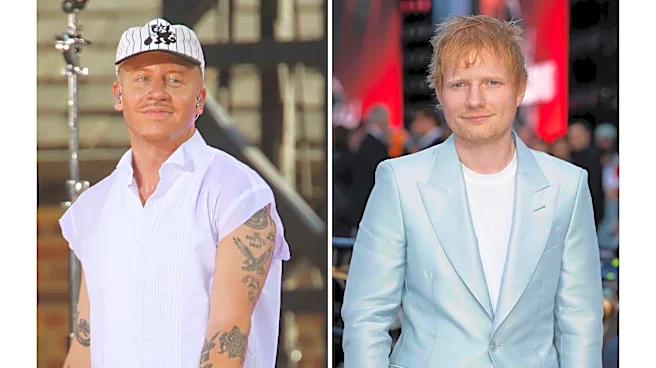
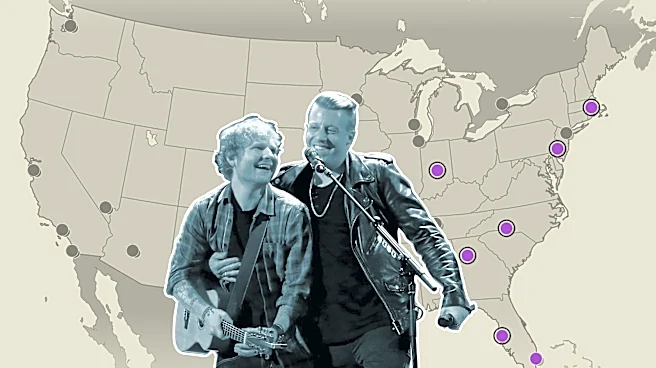
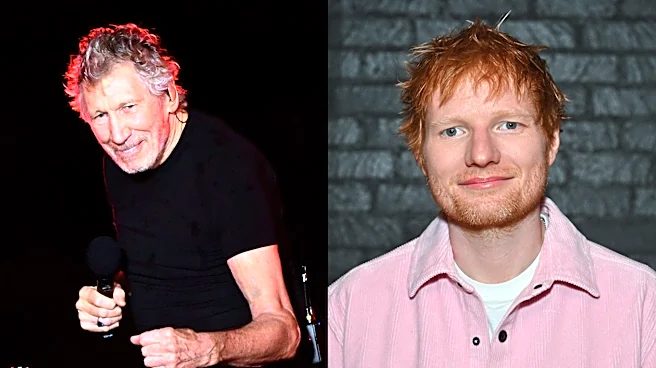
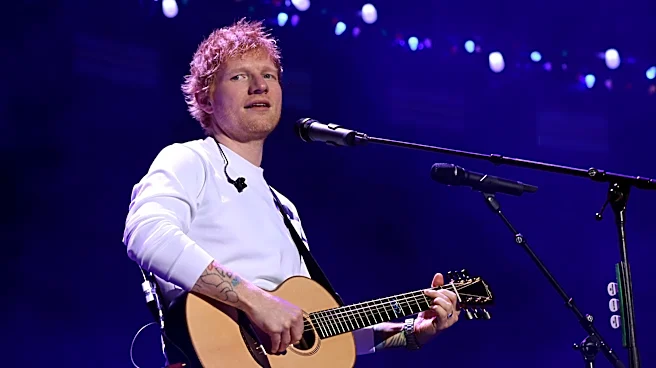
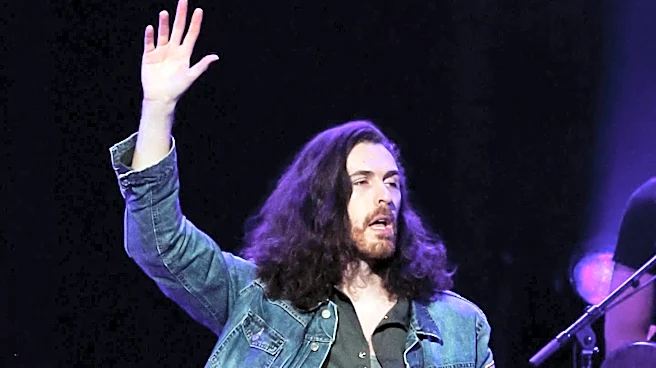
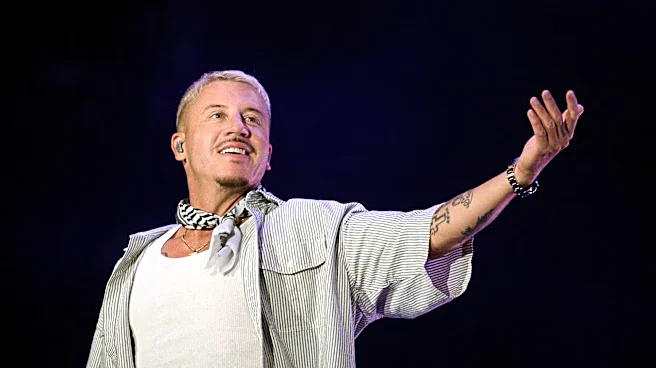
Hozier has shown support for Macklemore following Macklemore's removal from Ed Sheeran's 'The Loop' tour. Macklemore was removed after delivering a 'Free Palestine' speech during a performance at MetLife Stadium, where he also performed his song 'Hind's
Hall,' which condemns Israel's military operations in Gaza. Macklemore stated that Ed Sheeran informed him that American businessman Robert Kraft, owner of Gillette Stadium, contacted Sheeran and issued an ultimatum regarding Macklemore's continued participation in the tour. According to Macklemore, Kraft indicated that the phrase 'Free Palestine' and the Palestinian flag were offensive to many people. Ed Sheeran later clarified that the decision to remove Macklemore was made by venues and promoters, not by him, and that he attempted to mediate the situation. Sheeran also stated that he does not use his professional platform for politics, citing his audience which includes young people and children.
Why It's Important?
This event highlights the increasing pressure on public figures to take stances on geopolitical issues, particularly the Israeli-Palestinian conflict, and the potential professional repercussions of doing so. The involvement of prominent figures like Robert Kraft, a stadium owner, in tour decisions based on an artist's political statements, underscores the influence of business interests on artistic expression. The controversy also reveals a divide among celebrities, with some openly supporting Macklemore's right to free speech and his stance, while others, like Ed Sheeran, prefer to remain apolitical in their professional capacity. This situation could set a precedent for how artists navigate political activism and how venues and promoters respond to such expressions, potentially impacting future tour arrangements and artistic freedom within the entertainment industry.
What's Next?
The situation is likely to continue generating discussion within the entertainment industry and among the public regarding the intersection of celebrity, activism, and business. More celebrities may voice their opinions, either in support of Macklemore or in defense of Ed Sheeran's position. The incident could lead to further scrutiny of venue and promoter policies concerning political statements by performers. It may also prompt artists to reconsider how and when they express political views during performances, potentially leading to more cautious approaches or, conversely, inspiring more artists to use their platforms for activism, despite potential consequences. The ongoing debate could influence public perception of the involved artists and their future projects.
Beyond the Headlines
This incident delves into deeper questions about artistic freedom, corporate censorship, and the role of celebrities in political discourse. It raises ethical considerations about whether venues and promoters should have the power to dictate an artist's message, especially when it pertains to human rights issues. The controversy also reflects the broader societal polarization surrounding the Israeli-Palestinian conflict, where even a simple phrase can lead to significant professional backlash. The support shown by various celebrities, including Hozier, suggests a growing willingness among artists to stand in solidarity with those who use their platform for activism, even if it means facing professional challenges. This could contribute to a shift in the entertainment landscape, where political engagement becomes a more prominent, albeit risky, aspect of a celebrity's public persona.