




What's Happening?
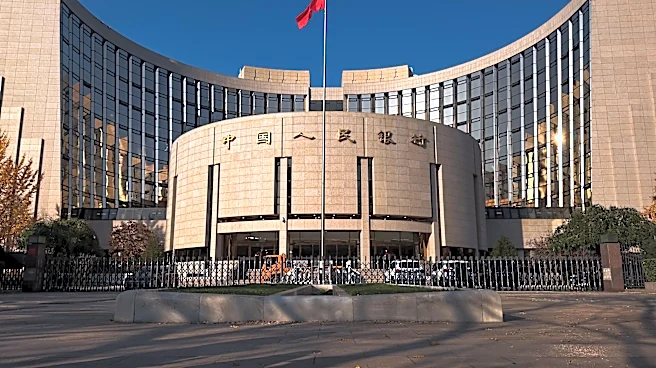
European Union officials, led by Director-General for Economic and Financial Affairs Maarten Verwey, met with People's Bank of China (PBOC) Governor Pan Gongsheng in Beijing on Monday. The primary objective of this meeting was to address broader economic
concerns. A key issue highlighted by EU officials, as previously reported by the South China Morning Post, is the weak yuan. They argue that a depreciated yuan makes Chinese goods more affordable for European consumers, which in turn puts additional pressure on manufacturers within the EU bloc. This discussion underscores ongoing economic tensions and the interconnectedness of global economies.
Why It's Important?
This meeting is significant because it highlights the growing concerns among European Union officials regarding China's economic policies, particularly its currency valuation. A weak yuan can create an uneven playing field in international trade, potentially leading to increased imports from China into the EU and negatively impacting European industries. This could result in job losses, reduced competitiveness for European manufacturers, and a widening trade deficit for the EU. The discussions reflect a broader effort by international bodies to ensure fair trade practices and address currency-related imbalances that can disrupt global markets and economic stability. The outcome of such dialogues can influence future trade relations and economic policies between China and the EU.
What's Next?
The meeting between EU officials and the PBOC Governor is likely part of an ongoing dialogue aimed at resolving economic disparities and fostering more balanced trade relations. While immediate policy changes may not result from a single meeting, these discussions lay the groundwork for potential future negotiations or adjustments in economic strategies. The EU may continue to press for a stronger yuan or other measures to mitigate the perceived competitive advantage of Chinese goods. Conversely, China will likely articulate its own economic priorities and challenges. Future interactions could involve further diplomatic efforts, trade policy adjustments, or even multilateral discussions within international economic forums to address these concerns.
Beyond the Headlines
The issue of a weak yuan extends beyond mere trade imbalances; it touches upon the fundamental principles of fair competition and economic sovereignty. For the EU, the pressure on its manufacturers due to cheaper Chinese imports can lead to calls for protectionist measures, potentially escalating trade tensions. This situation also raises questions about the transparency and influence of central bank policies on global markets. The dialogue between the EU and China reflects a broader geopolitical dynamic where economic power is increasingly intertwined with diplomatic influence. The long-term implications could include shifts in global supply chains, increased scrutiny of currency policies, and a re-evaluation of international trade agreements to address perceived unfair advantages.