



What's Happening?
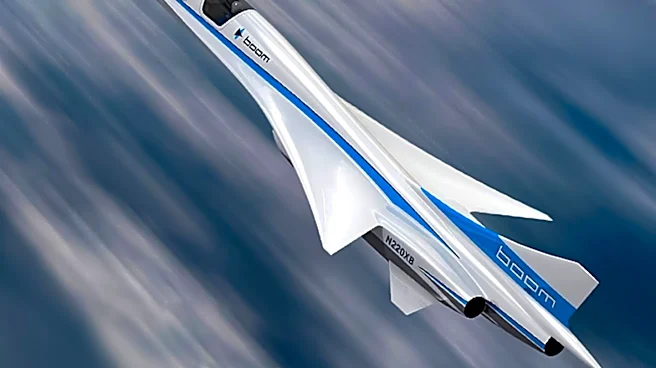
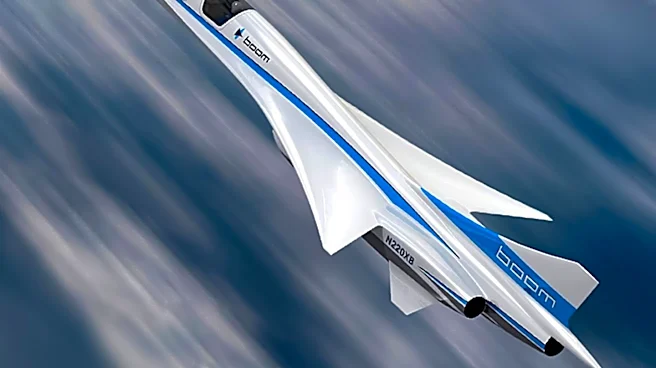
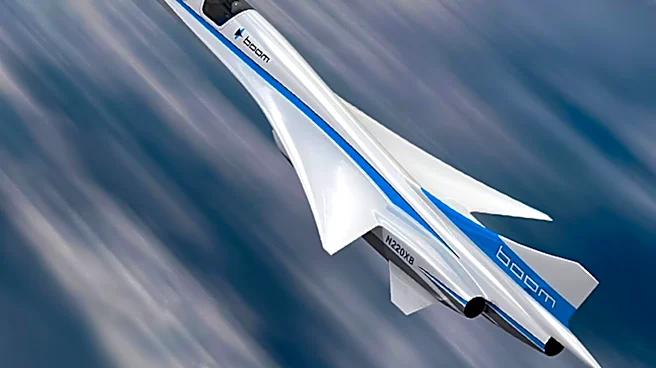
Boom Supersonic CEO Blake Scholl has emphasized the strategic importance of the company's turbine business, Superpower, in funding the development of its Overture supersonic airliner. On November 21, Boom successfully fired up the full-scale engine core,
which Scholl described as the first full-scale jet engine core built by a startup. This core is designed for both the Overture's Symphony engine and the 42-megawatt natural gas turbines for AI data centers. Scholl stated that the turbine business is not a distraction but rather a crucial financial mechanism, projecting that shipping just two turbines a month would make the company cash flow positive. This pivot came after Rolls-Royce withdrew from its partnership with Boom in 2022, prompting the company to develop its own engine and subsequently discover the lucrative market for AI data center power generation.
Why It's Important?
This strategy is highly significant for U.S. manufacturing and the future of high-tech industries. By leveraging the massive demand for electricity from AI data centers, estimated at around 100 gigawatts over the next decade (a $300 billion market), Boom Supersonic aims to self-finance the ambitious and capital-intensive Overture project. This approach could revolutionize how aerospace ventures are funded, reducing reliance on traditional investor capital. Scholl's argument that established turbine manufacturers like General Electric are not expanding capacity quickly enough due to Wall Street pressures creates a unique market opening for Boom. The company's decision to vertically integrate, manufacturing 85% of each turbine in-house, also highlights a growing trend in U.S. industry to control supply chains and accelerate production, particularly for specialized components like turbine blades, which can have long lead times from external suppliers.
What's Next?
The next major milestone for Boom Supersonic is the shipment of its first Superpower turbines, targeted for mid-2027. Scholl anticipates that the company will become cash flow positive upon the first shipment. While the Overture airliner's launch date is now projected to be one or two years later than the initial 2029 target, the turbine business is expected to provide critical operational data and financial stability. Boom plans to produce 25 turbines annually by 2028, increasing to 50 units in 2029. The success of this dual-business model will be closely watched as it could pave the way for other startups in capital-intensive sectors to create self-sustaining financial ecosystems, potentially reshaping investment and development strategies across various U.S. industries.
Beyond the Headlines
Boom Supersonic's innovative business model, where a high-demand industrial product (data center turbines) funds a visionary aerospace project (supersonic flight), represents a paradigm shift in startup financing and industrial strategy. This approach challenges the conventional wisdom of staying asset-light for hardware startups, demonstrating that vertical integration can be a more cost-effective and faster path to market for specialized components. The narrative also underscores the immense and often underestimated energy demands of the rapidly expanding AI sector, creating new market opportunities for power generation solutions. This could lead to a re-evaluation of energy infrastructure development in the U.S. to support technological advancements, potentially fostering new manufacturing hubs and specialized engineering jobs in the process.