

What's Happening?
Former St. John's Red Storm basketball player RJ Luis Jr. has been granted a temporary injunction by a Louisiana judge, clearing him to play for Louisiana State University (LSU) in the 2026-27 season. This decision comes despite Luis having previously
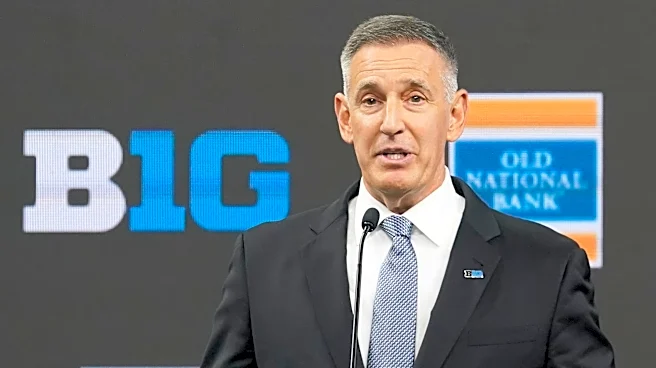
signed professional contracts with NBA organizations. Luis, who was the 2025 Big East Player of the Year, went undrafted in the 2025 NBA Draft but subsequently signed a two-way contract with the Utah Jazz, and was later traded to the Boston Celtics. He then signed an Exhibit-10 deal with the Maine Celtics, their G-League affiliate. However, Luis did not play in any NBA or G-League regular season games due to an injury. His attorneys argued that he lacked professional playing experience compared to other college players who signed from international leagues, while the NCAA contended that Luis chose to leave college for the NBA. SEC Commissioner Greg Sankey has expressed strong opposition to the ruling, arguing that athletes who sign professional contracts should not be allowed to return to college sports.
Why It's Important?
This ruling has significant implications for the landscape of college athletics, particularly concerning player eligibility and the blurred lines between amateur and professional sports. The decision to allow Luis to play for LSU, despite his professional contracts, challenges existing NCAA rules and could set a precedent for other athletes who have had brief professional stints but did not play in regular season games. For LSU, the addition of Luis, a proven scorer and athletic wing, is a major boost to their men's basketball roster, especially as head coach Will Wade aims to rebuild the team. The controversy highlights the ongoing tension between traditional NCAA eligibility standards and the evolving realities of player movement and professional opportunities in sports. The SEC's strong stance against such rulings indicates a potential legal battle ahead, which could further shape the future of college sports eligibility.
What's Next?
The NCAA is expected to appeal the Louisiana judge's ruling, indicating that the legal battle over RJ Luis Jr.'s eligibility is far from over. SEC Commissioner Greg Sankey has already voiced his displeasure and concern, suggesting that the conference might take action against schools that field players who have crossed into professional sports before returning to college. This situation could lead to further legal challenges and potentially influence the development of new national eligibility standards, such as those proposed in the 'Protect College Sports Act.' For LSU, while Luis is currently cleared to play, his long-term eligibility remains uncertain pending appeals. The outcome of this case could impact how other college teams approach recruiting players with similar professional backgrounds and may lead to a re-evaluation of existing rules by athletic conferences and the NCAA.
Beyond the Headlines
The case of RJ Luis Jr. delves into deeper ethical and structural questions about the nature of amateurism in college sports, especially in the era of Name, Image, and Likeness (NIL) deals. The argument that Luis did not play in a professional game, despite signing contracts, highlights a loophole that could be exploited by other athletes. This situation underscores the need for clearer, more consistent guidelines regarding professional experience and college eligibility. The NCAA's struggle to maintain its traditional amateur model in the face of increasing professionalization of sports is evident. This ruling could accelerate discussions about a more formalized system for athletes to transition between professional and collegiate play, or it could lead to stricter enforcement of existing rules to prevent what some see as an unfair competitive advantage. The broader implications touch upon the economic opportunities for athletes and the integrity of college sports as a distinct entity from professional leagues.