



What's Happening?
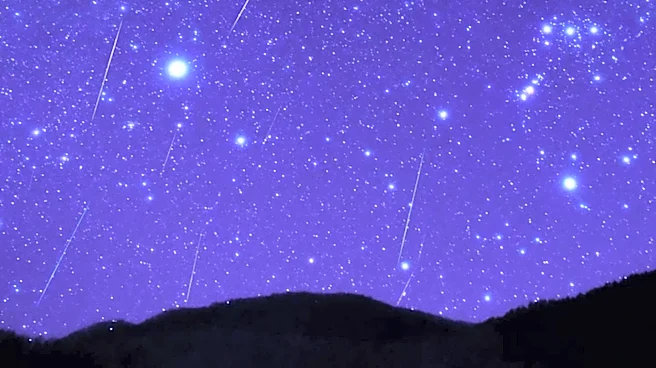
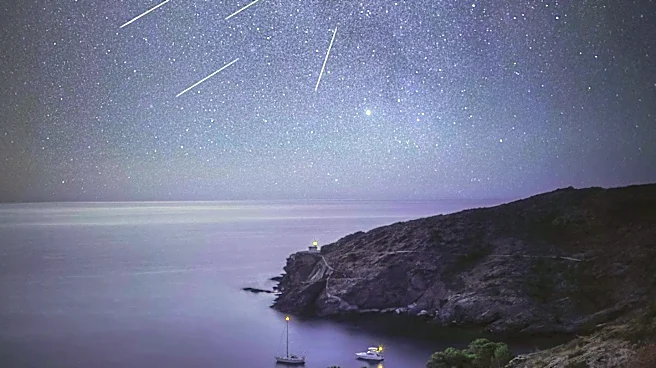
The Perseid meteor shower, one of the most anticipated astronomical events, is set to peak on the nights of August 12 and 13, 2026. This year, skywatchers can expect optimal viewing conditions with moon-free skies, allowing for the possibility of seeing
50-100 meteors per hour. The Perseids are known for their bright and colorful meteors, often leaving persistent trails. The shower is best viewed from midnight to dawn, with the radiant point located in the constellation Perseus. The parent comet of the Perseids, 109P/Swift-Tuttle, orbits the sun approximately every 133 years, contributing to this annual celestial display.
Why It's Important?
The Perseid meteor shower is a significant event for both amateur and professional astronomers, offering a spectacular natural display that draws public interest in astronomy. This year's favorable conditions could lead to increased participation in meteor watching, fostering a greater appreciation for space science and celestial phenomena. The event also provides educational opportunities for schools and science organizations to engage the public in learning about meteors, comets, and the broader universe. Such events can inspire future generations to pursue careers in science and technology, contributing to advancements in space exploration and research.
What's Next?
As the peak of the Perseid meteor shower approaches, astronomy clubs and observatories may organize public viewing events and educational programs to enhance the experience. The American Meteor Society and other organizations will likely provide updates and tips for optimal viewing. Additionally, the event could lead to increased interest in other upcoming astronomical phenomena, encouraging more people to explore the night sky. The success of this year's Perseid viewing could also influence future public engagement strategies for similar celestial events.