




What's Happening?
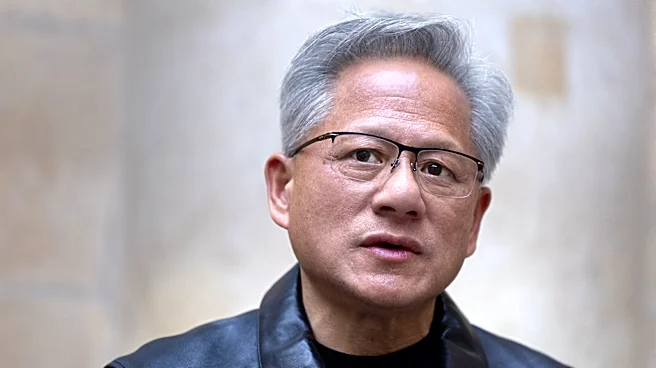
Nvidia's new CEO faces the significant challenge of rebuilding trust within the company following the departure of former CEO Jensen Huang. Huang, who was previously lauded for his transparent management style and for steering Nvidia's growth, exited
amidst reports of extramarital affairs. These affairs reportedly involved a direct report, another employee, and a client suspected of spying for China. This situation has created a perceived gap between Huang's stated commitment to candor and his actions. Colette Kress, the chief financial officer, has been appointed as interim CEO while the company searches for a permanent replacement. The scandal has left tens of thousands of employees grappling with the aftermath, requiring the new leadership to address cultural issues and refocus the workforce.
Why It's Important?
The scandal and subsequent leadership transition at Nvidia carry significant implications for the company, its employees, and the broader technology industry. Nvidia is a central player in the AI boom, and any internal instability could have ripple effects on its market position and innovation pipeline. The erosion of trust due to a CEO's misconduct can lead to decreased employee morale, increased cynicism, and potential talent drain, especially in a competitive sector. Rebuilding trust is a slow and consistent process, requiring the new CEO to navigate intense public scrutiny while ensuring operational continuity. The situation also highlights the importance of corporate governance and succession planning, particularly in companies led by charismatic founders. The challenge for the new leadership will be to demonstrate stability and reinforce ethical standards, which are crucial for maintaining investor confidence and employee loyalty.
What's Next?
The immediate next step for Nvidia is to conduct a thorough search for a permanent CEO, considering both internal and external candidates. The interim CEO, Colette Kress, will be tasked with maintaining stability and guiding the company through this transitional period. The new permanent CEO will need to prioritize addressing the cultural impact of the scandal, which may involve transparent communication with employees, reinforcing company values, and potentially implementing new policies to prevent similar issues. Experts suggest that the new leader will need to help employees process what is akin to a 'grief process' and refocus them on their work. The company's ability to quickly and effectively navigate this leadership transition and cultural repair will be critical for its continued success in the highly competitive AI market.
Beyond the Headlines
Beyond the immediate corporate challenges, the Nvidia scandal touches upon deeper themes of leadership ethics, corporate culture, and the cult of personality often associated with successful tech founders. Huang's departure underscores that even extraordinary results do not grant permission to deviate from company standards, sending a powerful message about accountability at the highest levels. This incident could prompt other tech companies to re-evaluate their internal policies regarding executive conduct and succession planning, especially those with flat organizational structures and a strong founder presence. The involvement of a client suspected of espionage also adds a layer of national security concern, highlighting the complex interplay between personal conduct, corporate relationships, and geopolitical sensitivities in the tech sector. Ultimately, the scandal serves as a case study on how personal actions of top executives can profoundly impact corporate trust, culture, and strategic direction, even in highly successful organizations.