


What's Happening?
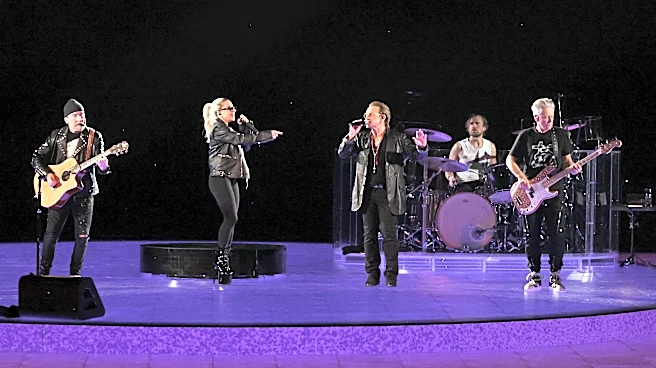
The Edge, guitarist for U2, has confirmed that he developed a 'treatment' for a sequel to the 2003 film 'Elf,' though he clarified it was not a full script. This revelation came after actor Andy Richter, who had a small role in the original movie, mentioned
on a podcast that The Edge had approached producer Shauna Robertson with a fully written 'Elf 2' script. The Edge stated that the idea for the sequel came to him in a dream, and he wrote down an outline for his own amusement. He shared the concept with a film producer friend but did not seriously expect it to be picked up. The original 'Elf' was a critical and commercial success, grossing $228.9 million worldwide on a $33 million budget. Lead star Will Ferrell previously declined a $29 million offer from Warner Bros. and New Line Cinema to return for a sequel, citing his inability to promote a film he didn't believe in wholeheartedly.
Why It's Important?
This story highlights the enduring cultural impact of successful films like 'Elf' and the continuous interest in developing sequels, even from unexpected sources like rock musicians. The confirmation from The Edge, a prominent figure outside the typical screenwriting circles, underscores the widespread appeal and creative inspiration that popular movies can generate. It also sheds light on the informal and often speculative nature of early-stage film development, where ideas can circulate and gain traction before any formal production begins. Will Ferrell's decision to decline a substantial offer for a sequel, prioritizing creative integrity over financial gain, is a significant point. This choice reflects a broader artistic principle within Hollywood, where some actors and creators opt to protect the legacy of a beloved work rather than participate in a potentially inferior follow-up, even if it means foregoing considerable income. This stance can influence how studios approach sequels, emphasizing the importance of original cast involvement and a compelling narrative.
What's Next?
Despite The Edge's treatment, an 'Elf 2' with Will Ferrell is highly unlikely given Ferrell's previous refusal to participate. The guitarist's idea, while intriguing, remains an unproduced concept. The original film's success and its status as a modern Christmas classic mean that discussions and ideas for sequels or reboots will likely continue to surface within the industry. However, without the involvement of its key star, any potential 'Elf' sequel would face significant challenges in capturing the magic and appeal of the original. The story serves as a reminder that even with a strong concept and a beloved franchise, the alignment of creative talent, financial incentives, and studio vision is crucial for a project to move from an idea to a produced film.
Beyond the Headlines
The anecdote about The Edge's 'Elf 2' treatment and Will Ferrell's refusal to return for a sequel delves into the complex dynamics of creative ownership and artistic legacy in Hollywood. It illustrates how a film's success can create a powerful brand, but also how the integrity of that brand can be fiercely protected by its original creators and stars. Ferrell's decision highlights a tension between commercial pressures to capitalize on popular IP and the artistic desire to maintain quality and authenticity. This situation is not unique to 'Elf'; many beloved films face similar sequel dilemmas, where the absence of key talent or a compelling new story can lead to a project being shelved indefinitely. It also subtly points to the informal networks within the entertainment industry, where ideas can be pitched and discussed through personal connections, sometimes leading to unexpected revelations years later.