

What's Happening?
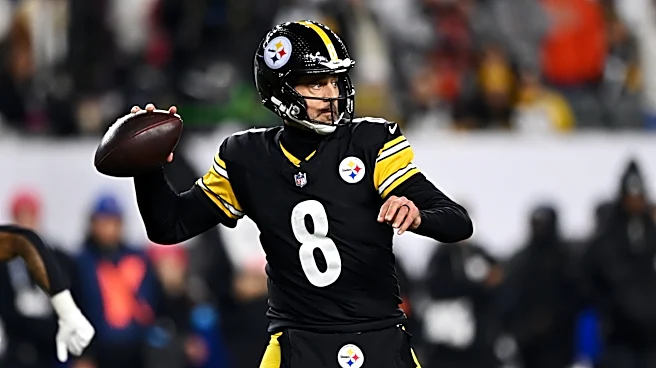
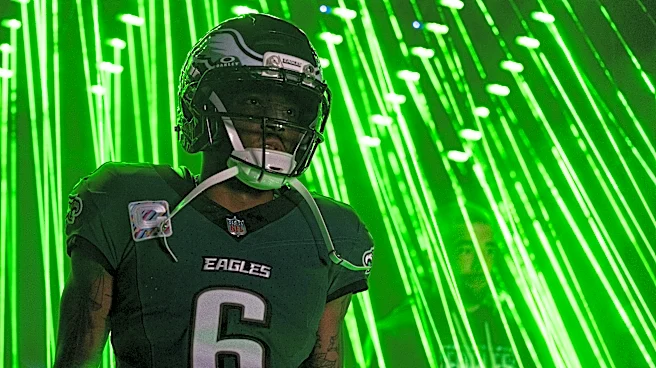
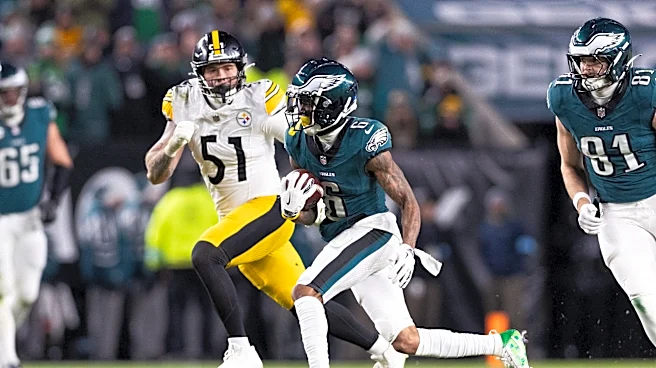
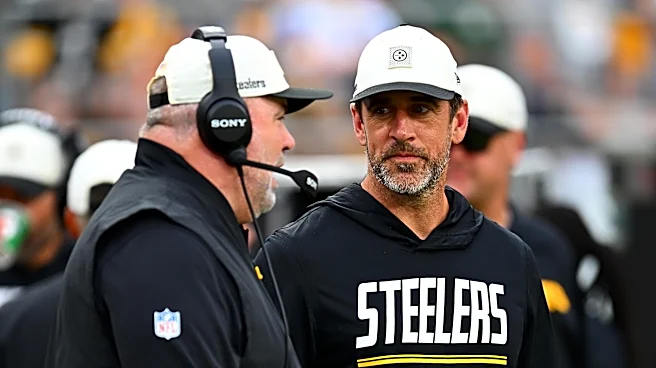
The Pittsburgh Steelers have not secured a victory against their in-state rival, the Philadelphia Eagles, in Philadelphia since 1965. This streak spans over six decades, encompassing eras of legendary Steelers players such as Terry Bradshaw, 'Mean Joe'
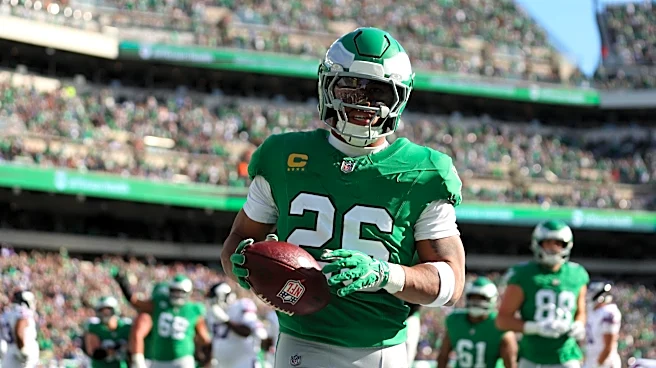
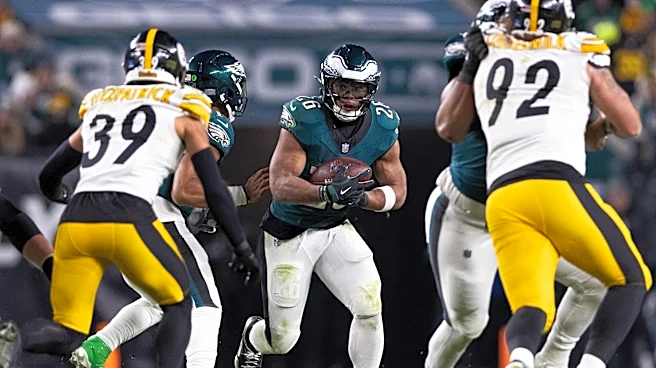
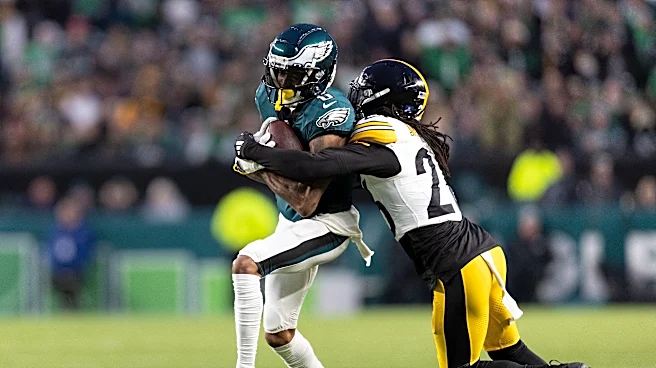
Greene, and Ben Roethlisberger. The most recent encounter, in 2024, saw the Eagles defeat the Steelers 27-13. In that game, Eagles quarterback Jalen Hurts and running back Saquon Barkley led a dominant performance, including a 21-play drive that consumed the final 10:29 of the fourth quarter. Steelers quarterback Russell Wilson struggled, completing only 14 passes for 128 yards, and no Steelers running back gained more than 14 yards. The historical infrequency of matchups between the two teams, due to being in different conferences, has resulted in only 20 total games over 61 years, with just 10 played in Philadelphia.
Why It's Important?
This prolonged losing streak highlights a unique historical anomaly in professional sports, particularly given the Steelers' consistent success and multiple Super Bowl victories across various eras. For fans, it represents a persistent point of rivalry and frustration for Steelers supporters, while Eagles fans can point to it as a source of pride. From a broader sports perspective, such a long-standing streak against a regional rival, despite the limited number of games, underscores the unpredictable nature of inter-conference play and specific venue challenges. It also provides a rich narrative for sports historians and commentators, illustrating how certain matchups can develop distinct patterns regardless of team strength over time. The streak also impacts team morale and fan expectations leading into these rare contests.
What's Next?
The Steelers and Eagles will continue to face each other periodically due to NFL scheduling, which dictates inter-conference matchups. Each future game played in Philadelphia will carry the weight of this historical streak, intensifying fan interest and media scrutiny. For the Steelers, breaking this streak will be a significant milestone, potentially boosting team morale and altering the narrative surrounding this particular rivalry. For the Eagles, maintaining the streak will be a point of pride and a testament to their historical home-field advantage against their cross-state opponents. The next time these two teams meet in Philadelphia, the historical context of this streak will undoubtedly be a central talking point.
Beyond the Headlines
Beyond the immediate game results, this streak reflects deeper aspects of sports culture, including the psychological impact of historical performance on teams and fan bases. It illustrates how certain venues can become 'unlucky' or 'fortress-like' for specific opponents, fostering narratives that transcend individual player performances. The limited number of games over such a long period also emphasizes the unique scheduling dynamics of the NFL, where inter-conference rivalries are less frequent but often more intensely scrutinized when they occur. This phenomenon contributes to the rich tapestry of NFL lore, providing a compelling storyline that connects generations of players and fans, and showcasing how historical patterns can persist even in a league designed for competitive balance.