




What's Happening?
Artificial intelligence is revolutionizing livestock monitoring by shifting from traditional, intermittent human observation to continuous, AI-driven prediction. This new paradigm involves learning each animal's personal baseline behavior and flagging
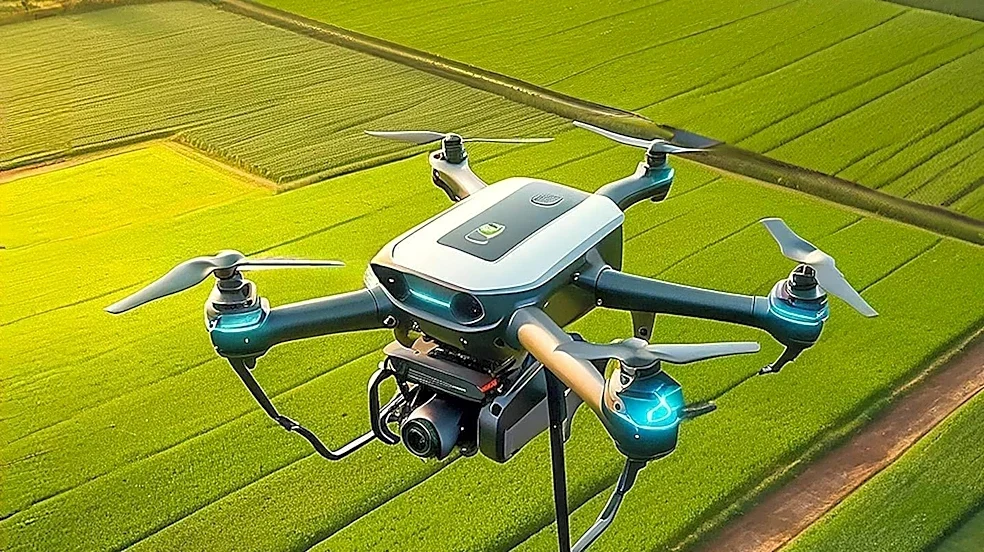
deviations, allowing for early detection of health issues or changes in condition before they become visible to humans. Key AI applications include body condition scoring, lameness detection, weight estimation, behavior and estrus detection, and individual identification, often achieving over 90% accuracy. The technology utilizes various sensing modalities such as wearables (collars with accelerometers and GPS), cameras for computer vision, microphones for detecting diseases like respiratory issues in pigs, and drones for autonomous mustering and pasture management. Companies like Halter are deploying solar-powered GPS collars with virtual fencing capabilities, while GrazeMate uses drones for autonomous cattle mustering and monitoring in the U.S. states of California and Texas.
Why It's Important?
The adoption of AI in livestock monitoring is crucial for addressing scalability issues, labor shortages, and the reactive nature of traditional farming practices. By providing continuous, individual animal monitoring, AI systems can significantly improve animal welfare, optimize breeding efficiency, and reduce economic losses due to late disease detection. For U.S. agriculture, this means more efficient resource management, increased productivity, and potentially higher profitability for ranchers and farmers. The shift to predictive analytics allows for proactive interventions, preventing widespread outbreaks and improving overall herd health. However, challenges remain, including high upfront costs, the need for robust connectivity in rural areas, and the potential for alert fatigue if systems generate too many false positives, which can undermine farmer trust and adoption.
What's Next?
The future of AI in livestock monitoring will likely see continued advancements in multimodal systems that integrate data from various sensors (audio, visual, wearable) for more comprehensive and accurate insights. Further development in edge computing will enable more processing to occur directly on farms, reducing reliance on stable internet connections. Companies will focus on refining algorithms to improve positive predictive value (PPV) to minimize false alarms and enhance user trust. There will also be an emphasis on developing more affordable and scalable solutions to make AI monitoring accessible to small and medium-sized farms, not just large-scale operations. Additionally, the ethical implications of technologies like virtual fencing, which use conditioning cues, will continue to be evaluated by welfare regulators and researchers.
Beyond the Headlines
Beyond the immediate operational benefits, the widespread adoption of AI in livestock management could lead to significant long-term shifts in agricultural practices and the broader food supply chain. It raises questions about data ownership and interoperability between different sensor vendors, which will be critical for building comprehensive datasets and fostering innovation. The technology also has the potential to further industrialize farming, potentially widening the gap between large-scale and smallholder operations if costs remain prohibitive. Furthermore, the integration of AI could influence consumer perceptions of animal welfare and sustainability, as these systems can provide more transparent data on animal health and living conditions. The evolution of farms into distributed sensor networks with autonomous actuators represents a fundamental architectural shift in physical AI, with implications extending beyond agriculture.