






What's Happening?
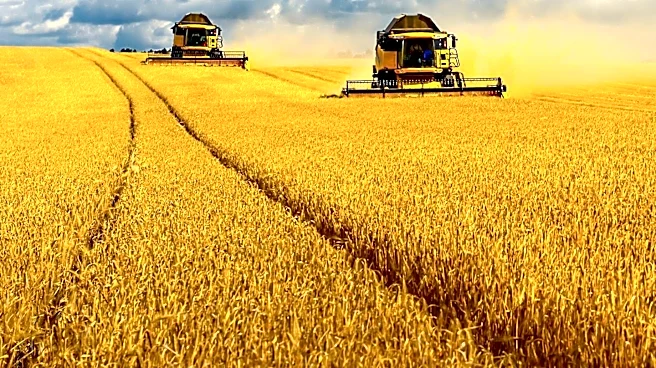
AGCO, a U.S.-based company founded in 1990, is recognized as a significant player in the global agricultural machinery industry, particularly in combine harvesters. The company's history is characterized by the acquisition and integration of several historic
brands, including Gleaner, Massey Ferguson, and Fendt. This strategy has allowed AGCO to consolidate diverse industrial traditions and harvesting technologies under one umbrella. For instance, the Gleaner brand, which originated in 1923 with the development of a self-propelled combine by the Baldwin brothers in Kansas, became part of AGCO through the acquisition of Deutz-Allis. AGCO's approach involves leveraging shared technological resources, exemplified by the IDEAL platform, which was developed to provide high-capacity combines with modern threshing and separation architectures. The company's distinctiveness lies in its narrative, which is not tied to a single brand or factory but rather to the amalgamation of multiple companies that began on different paths before converging into the same industrial group.
Why It's Important?
AGCO's business model of acquiring and integrating established brands has significant implications for the U.S. agricultural machinery sector and global market dynamics. By bringing together diverse technologies and industrial traditions, AGCO can offer a broad range of products catering to various farming needs, from high-capacity grain combines to specialized harvesting solutions. This consolidation strategy allows for economies of scale, shared research and development, and a wider market reach, potentially enhancing the competitiveness of U.S.-based agricultural machinery manufacturers on a global stage. For farmers, this means access to a wider array of advanced harvesting equipment, potentially leading to increased productivity and efficiency. The emphasis on shared technological resources, such as the IDEAL platform, also suggests a focus on innovation and the development of more sophisticated machinery, which can drive advancements across the industry.
What's Next?
The trend of consolidation and technological integration, as demonstrated by AGCO, is likely to continue shaping the future of the agricultural machinery industry. AGCO's ongoing efforts to develop and integrate advanced platforms like IDEAL indicate a future focus on high-capacity and technologically sophisticated combines. This will likely involve further investment in automation, sensors, vision systems, and digital tools to optimize operations and collect crop information. The company's strategy of acquiring and integrating brands suggests that future growth may come through continued mergers and acquisitions, further consolidating the market. This could lead to fewer, larger players dominating the industry, potentially impacting competition and product diversity. The emphasis on shared technological resources also points towards a future where agricultural machinery is increasingly standardized in terms of core technologies, while still offering specialized solutions under different brand names.
Beyond the Headlines
AGCO's history of integrating multiple industrial traditions highlights a broader theme in modern manufacturing: the creation of 'harvesting giants' through strategic acquisitions rather than solely organic growth. This approach allows companies to rapidly gain market share, intellectual property, and established customer bases. However, it also presents challenges in terms of integrating diverse corporate cultures, manufacturing processes, and product lines. The success of AGCO in this regard underscores the importance of effective post-acquisition integration strategies. Furthermore, the evolution of combine harvesters from purely mechanical devices to sophisticated information-gathering and processing machines raises ethical and legal questions regarding data ownership, privacy, and the potential for algorithmic bias in agricultural decision-making. As these machines become more autonomous and precise, the long-term implications for labor, land use, and food production systems will need careful consideration.