








What's Happening?
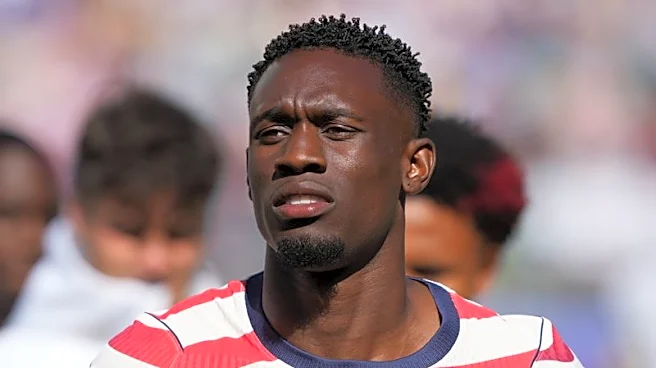
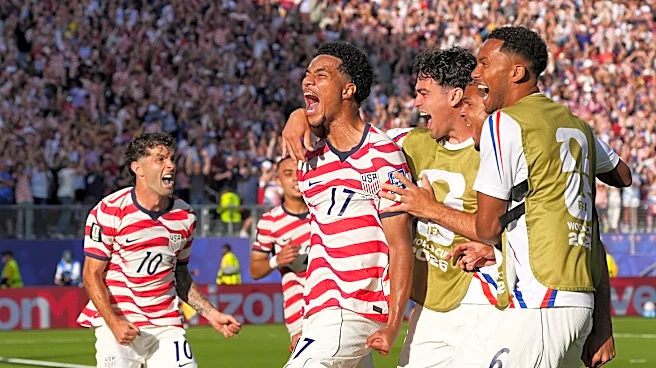
The U.S. national soccer team, composed of a significant number of immigrants and dual nationals, is set to face Belgium in a World Cup elimination game. On the 250th anniversary of the United States, the team exemplifies the nation's founding ideals
of diversity and inclusion. Six of the 26 players are foreign-born, while others have immigrant parents or grandparents. The team, led by Argentine coach Mauricio Pochettino, represents a melting pot of cultures, reflecting the vision of the Founding Fathers who saw immigration as a strength. The team's diverse backgrounds are celebrated as they train and compete with the U.S. flag on their jerseys.
Why It's Important?
The composition of the U.S. soccer team highlights the ongoing significance of immigration in shaping American identity and success. This diversity is seen as a strength, aligning with the historical vision of the Founding Fathers who advocated for an inclusive nation. The team's success on the international stage serves as a powerful symbol of unity and the potential of a multicultural society. It challenges current narratives around immigration and underscores the benefits of embracing diverse backgrounds. The team's performance and composition may influence public opinion and policy discussions on immigration in the U.S.
What's Next?
The U.S. soccer team will continue its World Cup journey, with the upcoming match against Belgium being a critical test of their abilities. Success in the tournament could further elevate the team's profile and reinforce the positive narrative around diversity and inclusion. The team's performance may also inspire other sports organizations to embrace multiculturalism and diversity in their recruitment and development strategies. Additionally, the team's journey could spark broader discussions on immigration policy and the role of immigrants in American society, potentially influencing future legislative and social initiatives.
Beyond the Headlines
The U.S. soccer team's story offers a deeper reflection on the cultural and social dynamics of the nation. It highlights the evolving nature of American identity, where diverse backgrounds contribute to a richer, more dynamic society. The team's success could serve as a catalyst for greater acceptance and integration of immigrants in various sectors beyond sports. It also poses ethical questions about the balance between national identity and global citizenship, as players navigate dual allegiances. The team's journey may inspire future generations to embrace their heritage while contributing to the broader American narrative.