





What's Happening?
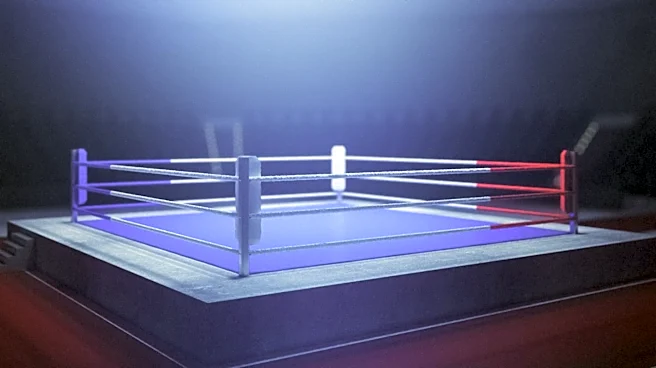
The boxing ring, a central element in the sport, is a square platform surrounded by ropes, despite its name suggesting a circular shape. This design evolved from early circular fighting areas to the modern square stage for safety and visibility. Standard
professional rings measure 20 feet per side, with four ropes defining the boundary. The term 'squared circle' reflects this historical transition. Governing bodies like the Association of Boxing Commissions set regulations for ring dimensions and rope spacing, which can influence fight dynamics. The ring's design and rules have significant implications for fighters' strategies and safety.
Why It's Important?
The design and regulations of a boxing ring play a crucial role in the sport, affecting both safety and competition. The size and rope configuration can favor different fighting styles, impacting the outcome of bouts. Understanding these elements is essential for promoters, trainers, and fighters, as they navigate the tactical and regulatory landscape of boxing. The historical evolution of the ring from a circle to a square highlights the sport's adaptation to modern safety standards. This knowledge is vital for maintaining fairness and safety in boxing, ensuring that the sport continues to evolve responsibly.