






What's Happening?
The United States is potentially on the verge of a significant productivity boom, driven by recent innovations in artificial intelligence (AI). This anticipated surge in productivity is projected to be comparable to the boom experienced in the late 1990s
and early 2000s, which saw a 14% increase in the real value of goods and services produced per hour of work above the prior trend. Investor expectations, as reflected in the market pricing of major AI-associated companies, suggest an economy-wide productivity acceleration of approximately 1.5 percentage points per year for the next 5-10 years. This potential economic shift raises critical questions regarding future monetary policy, particularly concerning interest rates and inflation.
Why It's Important?
A sustained productivity boom, fueled by AI, could have profound implications for the U.S. economy. Increased productivity typically leads to higher economic growth, improved living standards, and potentially lower inflation as more goods and services are produced efficiently. However, it also presents a challenge for monetary policy. The historical narrative of the 1990s productivity boom often credits Alan Greenspan's Federal Reserve for maintaining relatively lower interest rates, which supported investment and job creation without triggering inflation. If the Federal Reserve attempts to replicate this 'Greenspan playbook,' it could lead to debates about whether current interest rates are appropriately set, especially given that nominal interest rates were significantly higher in the 1990s despite slower inflation and tighter fiscal policy. The risk is that an overly loose monetary policy could undermine the sustainability of the investment surge and potentially contribute to asset bubbles, as some argue happened in the lead-up to the financial crisis.
What's Next?
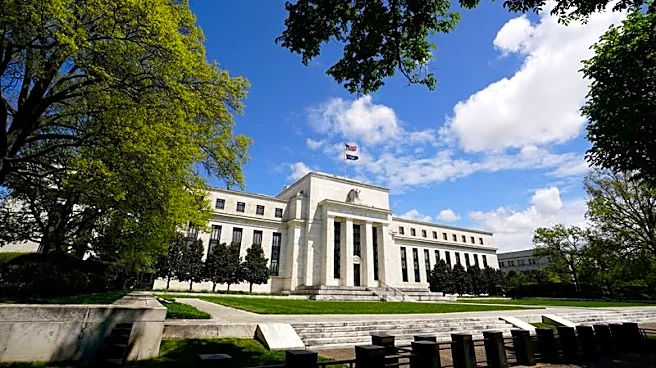
The Federal Reserve is reportedly forming a task force on 'productivity and jobs,' indicating that the potential impact of AI on the economy is a key area of focus for policymakers. This task force will likely analyze the extent of the productivity boost and its implications for employment and inflation. The central question for monetary policy will be how to respond to this acceleration in productivity growth. Policymakers will need to decide whether to maintain current interest rate levels, raise them to prevent potential overheating or asset bubbles, or even consider cuts if the productivity gains are disinflationary. The debate will involve comparing current economic conditions, including inflation and fiscal policy, with those of the 1990s to determine the most appropriate course of action. The decisions made by the Federal Reserve in the coming years will be crucial in shaping the economic trajectory during this potential AI-driven productivity era.
Beyond the Headlines
The anticipated AI-driven productivity boom extends beyond immediate economic indicators, touching upon broader societal and ethical considerations. While increased productivity can lead to economic prosperity, it also raises questions about job displacement, the future of work, and the equitable distribution of wealth generated by AI. The 'Greenspan playbook' narrative, while appealing, also carries a cautionary tale about the potential for monetary policy to inadvertently contribute to financial instability if not carefully managed. The challenge for policymakers will be to foster innovation and economic growth while mitigating risks such as excessive speculation or widening economic inequality. The long-term shifts triggered by AI could necessitate new approaches to education, workforce development, and social safety nets to ensure that the benefits of this technological revolution are widely shared and that the transition is managed smoothly for all segments of society.