



What's Happening?
One year after the enactment of the One Big Beautiful Bill Act (OBBBA), the federal energy incentive landscape has significantly changed for U.S. businesses. Some incentives have narrowed, while others, particularly those for carbon capture, hydrogen
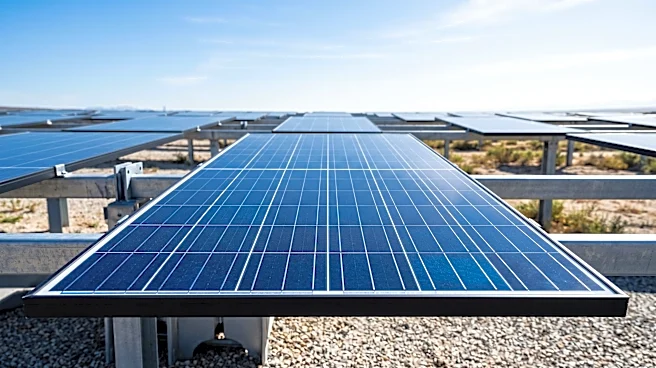
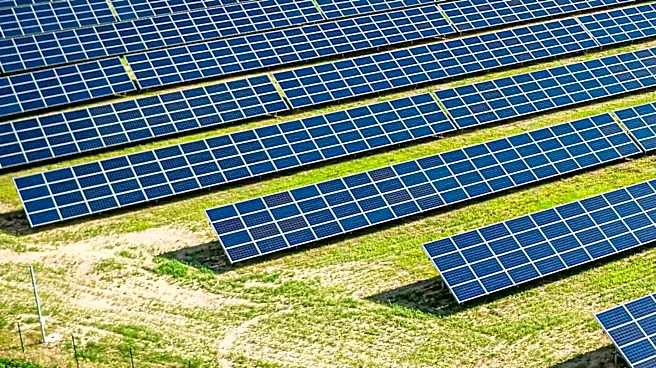
production, and clean fuel production, have been preserved or enhanced. Notably, Section 45Z, which covers clean fuel production, is now in a stronger position, with Induced Land Use Change (ILUC) removed from the carbon score for ethanol plants, making virtually all domestically produced ethanol eligible for credits up to $1.00 per gallon of gasoline equivalent. The IRS has also published regulations for Section 45Z, providing clarity. Conversely, some wind energy manufacturing credits have expired, and Section 48, related to renewable energy purchasers, was replaced by Section 48E, narrowing the window for certain wind and solar projects. Projects must begin construction by July 4, 2026, or be placed in service by the end of 2026 to claim 30% of project costs as a direct credit.
Why It's Important?
These shifts in energy incentives have profound implications for investment strategies and project development across various U.S. industries. The enhanced incentives for carbon capture, hydrogen, and clean fuels, particularly ethanol, could stimulate significant investment and innovation in these sectors, fostering job creation and technological advancement. The clarity provided by the IRS on Section 45Z reduces uncertainty for biofuel producers, potentially accelerating their projects. Conversely, the narrowing windows and expiration of certain wind and solar credits may lead to a re-evaluation of existing projects and future investments in those areas, potentially impacting the pace of renewable energy deployment. The new Prohibited Foreign Entity (PFE) requirements also tie tax incentives more closely to operational decisions, influencing supply chain choices and manufacturing locations, which could encourage domestic production and sourcing.
What's Next?
U.S. businesses, especially those in energy infrastructure, manufacturing, and clean technologies, will need to meticulously assess their investment plans for 2027 and beyond in light of these updated incentives. Companies with ongoing wind and solar projects face critical deadlines to qualify for the 30% direct credit, necessitating careful sequencing and procurement decisions. The interplay between different incentives, such as carbon capture improving the carbon intensity of hydrogen and biofuel production, will also be a key consideration for optimizing project economics. Business leaders are advised to involve procurement, operations, finance, and technical teams in evaluating eligibility, as incentives are now more closely linked to operational specifics. The post-OBBBA environment demands a more selective and integrated approach to investment strategy, ensuring that potential incentives are considered alongside broader business cases.
Beyond the Headlines
The evolving energy incentive landscape reflects a broader strategic shift in U.S. industrial policy, aiming to steer investment towards specific clean energy technologies while potentially de-emphasizing others. This selective approach could lead to uneven development across the renewable energy sector, favoring technologies like biofuels and carbon capture over certain wind and solar projects. The increased emphasis on domestic supply chains through PFE requirements, while intended to bolster national security and economic resilience, could also introduce complexities and higher costs for businesses. Ethically, the government's role in picking 'winners' and 'losers' through tax incentives raises questions about market neutrality and long-term technological diversity. The long-term success of these policies will depend on their ability to foster sustainable growth, technological innovation, and a resilient energy infrastructure without creating unintended economic or environmental consequences.