







What's Happening?
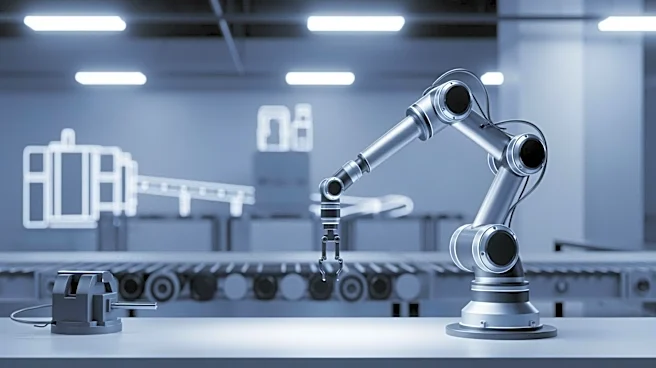
Morgan Stanley has significantly raised its forecast for China's humanoid robotics market, predicting 50,000 units will be shipped this year, nearly double its previous estimate. This adjustment reflects the faster-than-expected shift from demonstration
to commercial deployment in the industry. The bank anticipates the market will grow to $15 billion by 2030, with annual shipments reaching 446,000 units. Chinese companies currently dominate the market, with American firms like Figure AI and Tesla trailing behind. The rapid commercialization is supported by policy initiatives and supply-chain feedback, with applications expanding in factories, logistics, and unmanned retail stores.
Why It's Important?
The accelerated growth in China's humanoid robotics market presents significant investment opportunities, particularly as the country aims to lead in 'embodied AI' development. This trend could impact global tech dynamics, with China potentially setting standards in AI deployment. The U.S. may face challenges in maintaining its influence in AI applications if it focuses solely on technological benchmarks without considering broader adoption strategies. The rise of humanoid robots also highlights the increasing role of automation in industrial settings, potentially reshaping labor markets and operational efficiencies worldwide.
What's Next?
As China continues to push for dominance in the humanoid robotics sector, U.S. companies may need to adapt by enhancing their own AI and robotics strategies. This could involve increased investment in research and development, as well as forming strategic partnerships to compete effectively. The global market's evolution will likely prompt regulatory considerations and discussions on ethical AI use, particularly concerning labor displacement and data privacy. Stakeholders in the U.S. and other countries will need to monitor these developments closely to align their policies and business strategies accordingly.