



What's Happening?
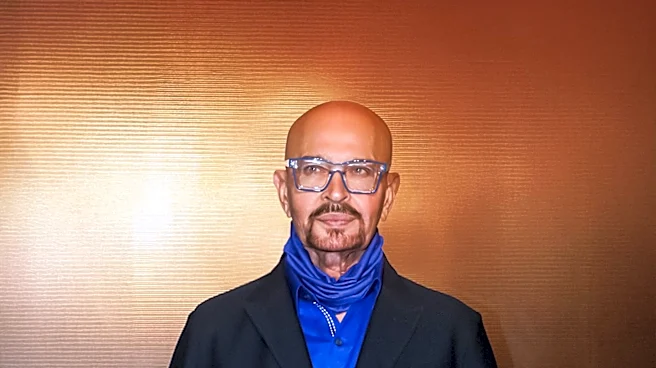
Comedian Howie Mandel made a controversial joke about receiving 'happy ending' massages during an episode of his podcast, 'Howie Mandel Does Stuff,' co-hosted with his daughter, Jackie Shultz. Mandel, 70, claimed he pays $25 for 'tuggies' and 'hand jobs,'
which visibly shocked his 42-year-old daughter and their guest, influencer Camilla Araujo. Shultz expressed discomfort, stating it was not a typical father-daughter conversation and questioned if such an act would be considered cheating, especially given Mandel's nearly 50-year marriage to Terry Soil. Mandel's representative later clarified that the confession was part of his stand-up routine and a joke, emphasizing that Mandel is a germaphobe who has never actually had a massage. The representative also noted that Mandel's daughter and wife were aware of and in on the joke.
Why It's Important?
This incident highlights the evolving landscape of celebrity interaction with the public through personal platforms like podcasts. While intended as humor, the joke sparked a public reaction due to its suggestive nature and the context of a father-daughter dynamic. It underscores the fine line celebrities walk between entertainment and potential controversy, especially when discussing sensitive topics. The immediate clarification from Mandel's representative indicates a rapid response to manage public perception, reflecting the heightened scrutiny celebrities face in the digital age. The situation also touches upon societal norms regarding marital fidelity and the boundaries of humor in family-oriented content, prompting discussions about what is considered appropriate for public consumption, even within a comedic framework.
What's Next?
Following the clarification from Howie Mandel's representative, it is likely that the immediate public discussion around the 'happy ending' massage joke will subside as the context of it being a pre-planned comedic bit becomes more widely known. However, the incident may still contribute to ongoing conversations about the nature of celebrity humor and the potential for misinterpretation, particularly when content is shared across various media platforms. Mandel and his daughter may continue to address the topic, possibly incorporating the public's reaction into future podcast episodes or stand-up material, further blurring the lines between personal life and performance. The event could also serve as a case study for other public figures on managing their image and communications in an era where personal and professional content often intertwine.
Beyond the Headlines
The incident delves into the broader implications of humor and public discourse in the digital age, particularly concerning celebrity culture. It raises questions about the audience's role in interpreting comedic content and the responsibility of public figures to anticipate potential reactions. The joke, even if intended as satire, touches upon themes of sexual innuendo and marital fidelity, which can evoke strong responses and spark ethical debates about what constitutes acceptable humor. Furthermore, the rapid dissemination of such content through podcasts and social media means that initial reactions can quickly escalate before full context is provided, highlighting the challenges of content moderation and reputation management for public figures. This event underscores the ongoing tension between artistic freedom in comedy and societal expectations of decorum, especially when family members are involved in the public presentation of potentially controversial material.