




What's Happening?
Dallas Mavericks governor Patrick Dumont, who also serves as CEO and chairman of Las Vegas Sands, played a central role in discussions regarding a potential new NBA arena in Las Vegas. This development comes as the NBA considers expansion into Las Vegas,
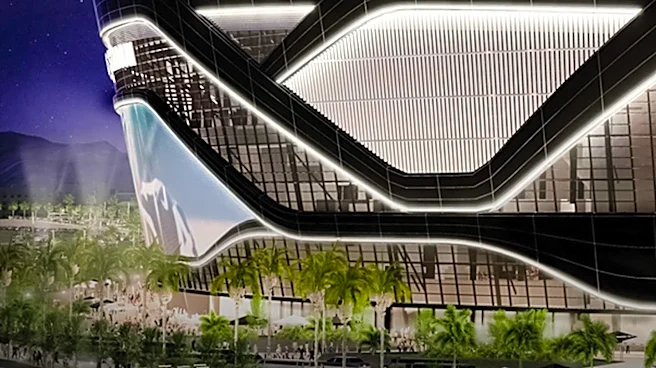
with three ownership groups vying for a new franchise. One of these groups, led by Golden Knights owner Bill Foley and former Suns owner Jerry Colangelo, has detailed plans for a new arena, which they have discussed with USA Basketball and the NBA Summer League as a potential host venue. The NBA is expected to select an ownership group in the coming weeks or by the end of the year. All three prospective ownership groups have expressed interest in a new arena, potentially as an anchor for a larger resort/casino complex and entertainment district. The exact location for such a complex remains undecided, contributing to potential delays, with a new Las Vegas team possibly not tipping off until the 2029-30 season. While Las Vegas currently has the 10-year-old T-Mobile Arena, NBA Commissioner Adam Silver has indicated it would require up to $400 million in renovations to host an NBA team, making a new arena a more likely option.
Why It's Important?
The involvement of Patrick Dumont, a prominent figure in both the NBA and the Las Vegas Sands corporation, highlights the significant intersection of professional sports and the hospitality industry in the potential Las Vegas NBA expansion. This move could reshape the landscape of professional sports in the U.S., particularly by establishing a major NBA presence in a city renowned for entertainment and gaming. The development of a new arena would not only provide a state-of-the-art facility for a new NBA team but also serve as a substantial economic driver for Las Vegas, creating jobs and attracting tourism through a new entertainment complex. For the NBA, expanding into Las Vegas represents a strategic growth opportunity, tapping into a vibrant market and potentially increasing its national and international appeal. The decision to build a new arena rather than renovating an existing one underscores a long-term vision for a dedicated NBA facility, signaling a significant investment in the city's future as a major sports hub. This could also set a precedent for how future sports expansions are approached, emphasizing integrated entertainment districts.
What's Next?
The NBA is anticipated to make a decision on the new Las Vegas ownership group in the coming weeks or by the end of the year, as previously indicated by Commissioner Adam Silver. Following this decision, the chosen group will likely move forward with plans for a new arena and associated entertainment complex. The design, approval, and construction phases for such a large-scale project are expected to be lengthy, potentially delaying the new team's debut until the 2029-30 season. Stakeholders, including the NBA, the selected ownership group, and local Las Vegas authorities, will need to collaborate on zoning, financing, and development plans. The involvement of figures like Patrick Dumont suggests a strong push for an integrated resort and arena model, which could influence the scope and scale of the project. Further discussions will likely involve USA Basketball and the NBA Summer League regarding potential hosting opportunities at the new facility, which could enhance Las Vegas's standing as a premier destination for basketball events.
Beyond the Headlines
The push for a new NBA arena in Las Vegas, spearheaded by figures like Patrick Dumont, reflects a broader trend of professional sports leagues seeking to integrate with entertainment and tourism industries. This strategy aims to create immersive experiences for fans and generate diverse revenue streams beyond traditional game-day income. The potential for a new NBA franchise in Las Vegas also raises questions about the evolving relationship between sports and legalized gambling, given the city's status as a global gaming hub. While the NBA has historically maintained a cautious stance on gambling, its expansion into Las Vegas could signal a more direct engagement with this aspect of the entertainment economy. Furthermore, the development of a large-scale sports and entertainment complex could have significant urban planning and environmental implications for Las Vegas, requiring careful consideration of infrastructure, traffic, and resource management. The long-term success of such a venture will depend not only on the performance of the team but also on its ability to seamlessly integrate into the city's unique economic and cultural fabric.