







What's Happening?
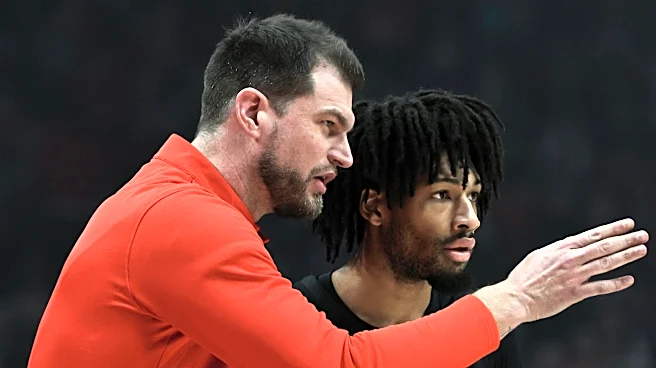
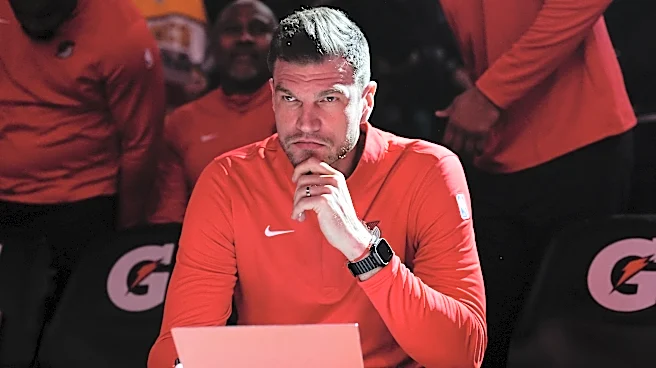
Tiago Splitter has been named the new head coach of the Chicago Bulls, succeeding Billy Donovan. Splitter's career in basketball spans playing and coaching roles, including a championship-winning stint with the San Antonio Spurs. He has also been involved
with the Brazilian national team as a player and coach. Splitter's coaching career began with the Brooklyn Nets, where he served as a scout and player development coach. He later gained head coaching experience in France with Paris Basketball, leading them to significant successes. His interim head coaching role with the Portland Trail Blazers showcased his ability to manage a team under challenging circumstances. Splitter's coaching style is characterized by a focus on simplicity and adaptability, which he plans to implement with the Bulls as they prepare for a pivotal offseason.
Why It's Important?
Tiago Splitter's appointment as head coach is a significant development for the Chicago Bulls as they aim to rebuild and enhance their competitive edge. His diverse experience in the NBA and international basketball provides him with a comprehensive understanding of the game, which is crucial for developing the Bulls' young roster. Splitter's strategic approach, which emphasizes simplicity and adaptability, is well-suited to the team's current needs. This coaching change is part of a broader strategy to revitalize the Bulls and improve their performance in the league. The success of this transition could have lasting impacts on the team's future, influencing their ability to attract talent and achieve competitive success.
What's Next?
As the new head coach, Tiago Splitter will focus on preparing the Chicago Bulls for the upcoming NBA draft and the next season. He will have the opportunity to implement his coaching philosophy and develop a cohesive strategy for the team. The Bulls' management will be closely monitoring how Splitter's leadership influences the team's dynamics and performance. The integration of new players from the draft and the development of existing talent will be key priorities. The team's ability to adapt to this new leadership and achieve success on the court will be critical in determining the long-term impact of this coaching change.