







What's Happening?
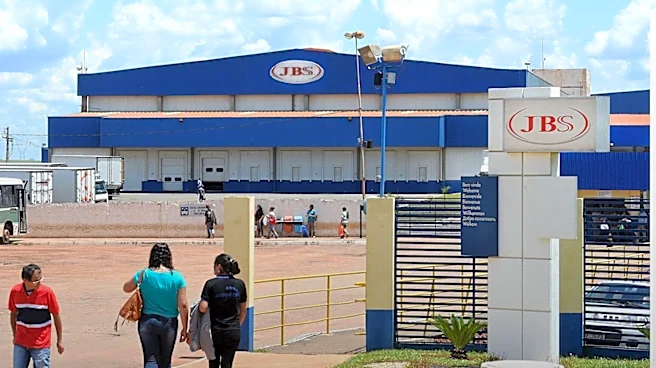
JBS N.V. has finalized a transaction establishing a new multiprotein production platform in Oman, focusing on beef, poultry, and lamb. This joint venture, with a US$150 million investment from JBS, grants the company an 80% stake in a newly formed food
holding company that consolidates two production assets in Oman. Oman Food Capital (OFC), the food and agribusiness investment arm of the Oman Investment Authority (OIA), holds the remaining 20%. The initiative aims to bolster food security in Oman, aligning with the Sultanate's Vision 2040, and position the country as a strategic hub for exporting halal food products to a global market estimated at 2 billion consumers. Investments will primarily fund the completion of A'Namaa's integrated poultry plant in Ibri and Al Bashayer's beef and lamb processing facility in Thumrait.
Why It's Important?
This strategic move by JBS is significant for the global food industry, particularly in the context of international trade and food security. By establishing a multiprotein hub in Oman, JBS is diversifying its geographical footprint and protein offerings, while gaining closer proximity to key consumer markets in the Middle East and beyond. The focus on halal food production taps into a substantial and growing global market, potentially increasing JBS's revenue streams and market share. For Oman, the investment contributes to its Vision 2040 by enhancing food security and creating a new export platform, which could stimulate economic growth and generate over 3,000 direct jobs over the next five years. This venture also highlights the increasing importance of international partnerships in addressing global food demands and supply chain resilience.
What's Next?
The immediate next steps involve the completion and commissioning of the integrated poultry plant and the beef and lamb processing facility in Oman. Once operational, these facilities are expected to achieve a static industrial production capacity of approximately 300,000 tons per year, processing around 1,000 cattle, 5,000 lambs, and 600,000 chickens daily. JBS will focus on integrating these new operations into its global supply chain and expanding its reach within the halal market. Future developments will include monitoring the actual production levels against planned capacities, managing the availability and cost of livestock, feed, and labor, and navigating any regulatory or trade restrictions. The success of this venture will be closely watched as a model for international food production partnerships.
Beyond the Headlines
The JBS investment in Oman extends beyond mere business expansion; it touches upon critical geopolitical and cultural dimensions. The focus on halal food production underscores the growing economic power and specific dietary requirements of the global Muslim population, influencing international food trade and agricultural practices. This initiative also reflects a broader trend of food-producing nations and companies seeking to establish regional hubs to enhance supply chain resilience and reduce reliance on distant imports, especially in regions prone to food security concerns. The partnership between JBS and Oman Food Capital exemplifies how private sector investment can align with national strategic goals, such as Oman's Vision 2040, to foster economic diversification and sustainable development in the food sector.