







What's Happening?
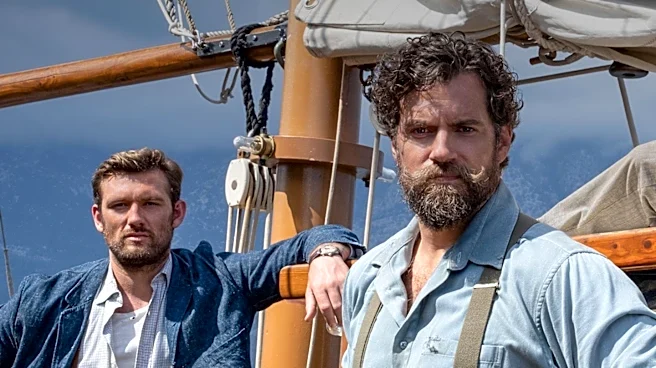
Henry Cavill's latest film, 'The Ministry of Ungentlemanly Warfare,' directed by Guy Ritchie, is experiencing a resurgence in popularity on streaming platforms despite its modest box office performance. The 2024 World War II epic, which stars Cavill as
Gustavus Henry March-Phillipps, a character said to have partly inspired James Bond, has garnered a 91% positive rating from verified ticket purchasers on Rotten Tomatoes. The film, loosely based on real events from 'Operation Postmaster,' follows a clandestine group of agents tasked with dismantling a Nazi operation. Despite Cavill's previous success in major franchises like Superman and The Witcher, his standalone films have often struggled commercially. The movie features an ensemble cast including Alan Ritchson, Eiza González, and Henry Golding, and is produced by industry veteran Jerry Bruckheimer. It is currently available for streaming on Prime Video.
Why It's Important?
The streaming success of 'The Ministry of Ungentlemanly Warfare' highlights a growing trend in the entertainment industry where films that underperform in cinemas find a second life and critical appreciation on digital platforms. This shift can influence production strategies, potentially encouraging studios to invest in films with strong critical appeal that might not be immediate box office hits, knowing they can recoup investments through streaming deals. For actors like Henry Cavill, it demonstrates that their star power can still draw significant audiences, even if the traditional theatrical release doesn't fully capture it. This phenomenon also underscores the evolving viewing habits of audiences, who increasingly prefer the convenience of home streaming, impacting how success is measured in the film industry.
What's Next?
The positive reception of 'The Ministry of Ungentlemanly Warfare' on streaming could lead to increased interest in similar historical action films, particularly those featuring ensemble casts and established directors like Guy Ritchie. For Henry Cavill, this streaming success might bolster his appeal for future roles, potentially influencing casting decisions for upcoming projects. The film's performance could also encourage studios to re-evaluate their release strategies, possibly opting for hybrid releases or prioritizing streaming availability sooner for certain types of films. Furthermore, the renewed attention could spark discussions about the long-term viability of exclusive theatrical windows versus immediate streaming access for mid-budget productions.
Beyond the Headlines
This trend of streaming success for theatrically underperforming films points to a broader redefinition of what constitutes a 'successful' movie in the modern era. It challenges the traditional box office as the sole metric of a film's impact and profitability, suggesting that audience engagement and critical reception on streaming platforms hold significant value. This shift could empower filmmakers to pursue more diverse and niche projects that might not fit the blockbuster mold but resonate deeply with specific audiences. It also raises questions about the future of cinema as a communal experience versus the individualized home viewing experience, and how these two models will coexist and influence each other in the evolving media landscape.