





What's Happening?
Semiconductor Manufacturing International Corporation (SMIC), a prominent Chinese foundry, announced a substantial increase in its Q3 2026 revenue, reaching US$3.19 billion. This figure represents a 33.9% year-on-year growth, surpassing the company's
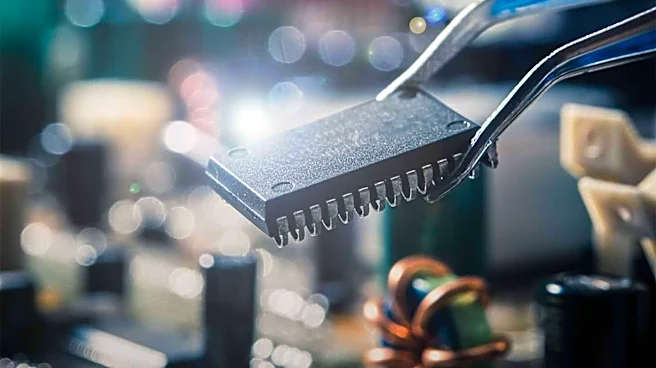
own guidance. The surge in revenue is primarily attributed to robust demand for AI-related supporting chips, including power-management, specialty-memory, and controller chips. Factory utilization at SMIC also climbed to 97.3%. This performance highlights the growing importance of less glamorous, yet essential, components that support advanced AI processors in various applications such as data centers, servers, cars, industrial systems, and consumer electronics. The company's success underscores a broader trend within China's semiconductor industry, where different segments of the value chain are experiencing rapid growth and increased activity in both manufacturing and design.
Why It's Important?
SMIC's strong financial performance is significant as it indicates a shift in the global semiconductor landscape, particularly concerning the impact of AI investment. While advanced AI processors often capture headlines, SMIC's growth demonstrates that the AI boom creates substantial opportunities further down the supply chain for supporting chips. This development is crucial for the U.S. as it highlights China's increasing self-sufficiency and technological advancement in critical areas of semiconductor manufacturing. The demand for these supporting chips, which are integral to the functioning of AI data centers and other digital infrastructure, suggests that China is strengthening its foundational capabilities in the tech sector. This could lead to reduced reliance on foreign technology, potentially impacting U.S. semiconductor companies that have historically dominated these segments. The rise of Chinese foundries like SMIC also signifies a growing competitive pressure on global semiconductor manufacturers, influencing market dynamics and supply chain strategies.
What's Next?
The continued strong demand for AI-related supporting chips is likely to drive further investment and expansion within China's semiconductor manufacturing sector. SMIC and other Chinese foundries may continue to increase their production capacities and technological capabilities to meet this demand. This trend could lead to increased competition in the global market for these essential components, potentially affecting pricing and market share for international players. Additionally, the focus on supporting chips suggests that China's semiconductor strategy is becoming more comprehensive, aiming to build a robust ecosystem that can sustain its technological ambitions. This could prompt U.S. policymakers and industry leaders to re-evaluate their strategies regarding semiconductor supply chains, intellectual property, and trade relations with China, as the country's capabilities continue to evolve across various segments of the chip industry.
Beyond the Headlines
The success of SMIC in meeting the demand for AI-related supporting chips reveals a deeper implication: the AI chip race is not solely about raw processing speed or the most advanced processors. It also encompasses the ability to produce a vast array of reliable, high-volume chips that enable the entire AI ecosystem to function. This broader perspective highlights the ethical and strategic considerations for nations like the U.S. regarding technological independence and supply chain resilience. As China strengthens its capabilities in these foundational areas, it raises questions about the long-term implications for global technological leadership and national security. The development also underscores the importance of a holistic approach to semiconductor policy, recognizing that the strength of an industry lies not just in its cutting-edge innovations but also in its capacity to produce the essential components that underpin those innovations.