


What's Happening?
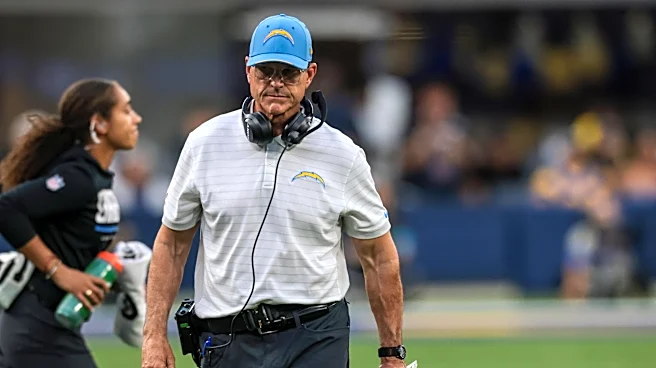
Former Los Angeles Chargers defensive tackle Breiden Fehoko has publicly criticized Chargers owner Dean Spanos, General Manager Joe Hortiz, and Head Coach Jim Harbaugh for their perceived incompetence regarding player trades. Fehoko's comments came after
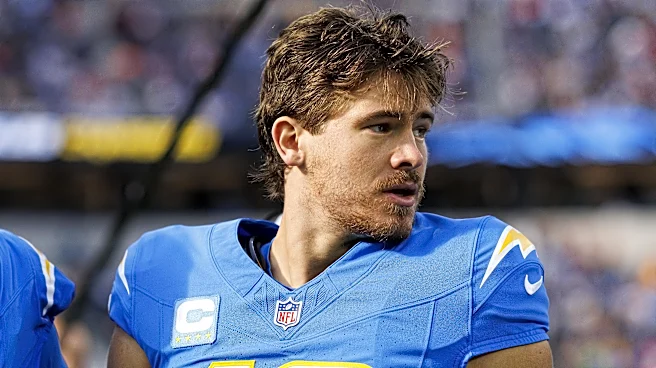
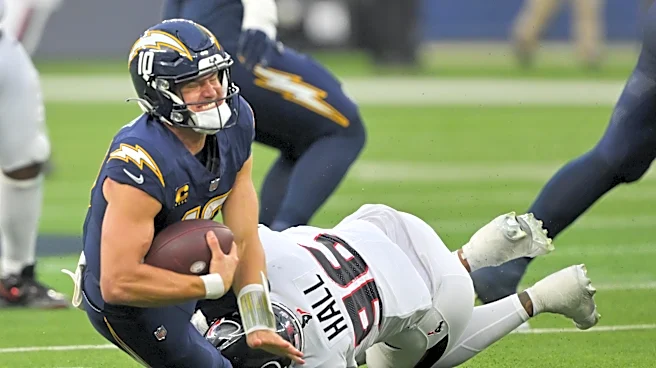
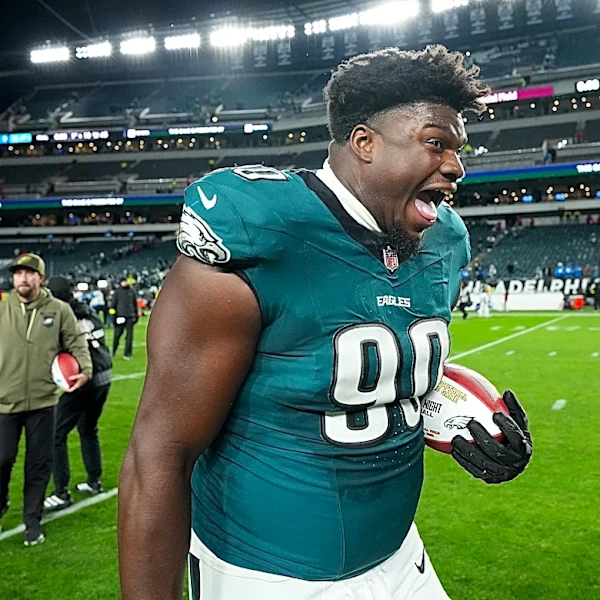
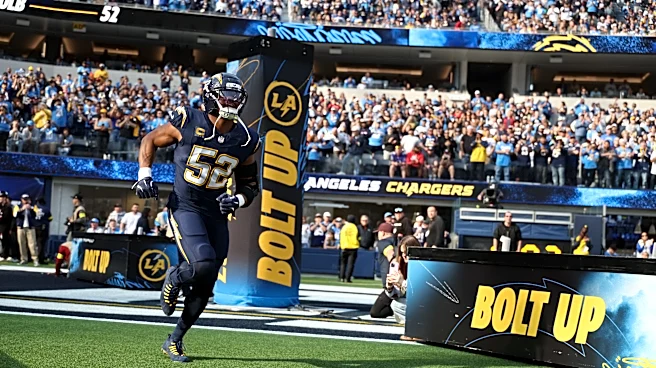
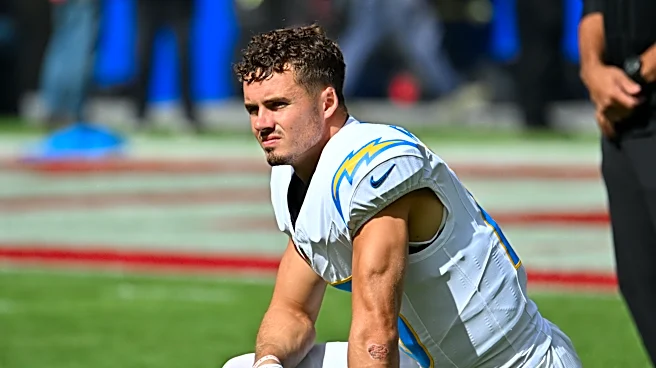
the Philadelphia Eagles, despite a losing record, traded defensive tackle Jordan Davis for two early draft picks. In contrast, the Chargers, who also have a poor record, reportedly refused to trade veteran players like Khalil Mack, Justin Herbert, and Ladd McConkey, even after receiving inquiries. Fehoko stated that teams without a chance at winning should sell players, while those in a championship window should buy. The Chargers are currently 30th in PFN Team Impact Grade and hold the projected No. 1 pick in the 2027 draft, yet they appear unwilling to part with key assets for future draft capital.
Why It's Important?
This situation highlights a significant philosophical divide in professional sports management regarding team building and asset management, particularly for struggling franchises. The Chargers' decision to retain veteran players, despite a dismal season and a clear opportunity to acquire future draft picks, could have long-term implications for their competitiveness. By not trading players like Khalil Mack, who is 35 and on a one-year contract, the team risks losing him in free agency without any compensation. This approach contrasts sharply with the Eagles' strategy, which prioritized future assets over retaining a player on a losing team. For fans and stakeholders, this decision raises questions about the team's commitment to a rebuild and its ability to adapt to modern NFL management strategies, potentially prolonging their period of underperformance.
What's Next?
The Chargers have until the trade deadline to potentially alter their strategy and make moves. If the deadline passes without any significant trades, the team will likely continue with its current roster, hoping for a turnaround in performance. However, given their current standing and projected draft position, a quiet deadline would reinforce the perception of a management team unwilling to make tough decisions for the future. The team's performance in upcoming games, starting with a Monday night game against Baltimore, will be crucial in shaping public and media perception of their current strategy. The long-term contracts and future of players like Khalil Mack, Justin Herbert, and Ladd McConkey will remain a focal point as the season progresses and the next offseason approaches.
Beyond the Headlines
The criticism from a former player like Breiden Fehoko underscores a broader sentiment among some in the sports community regarding the Chargers' ownership and management. This public critique can further erode fan confidence and potentially impact player morale, as it suggests a lack of strategic foresight. The reluctance to trade valuable assets, even when a team is clearly not contending, can be seen as a failure to maximize future potential. This situation could also influence how other NFL franchises view the Chargers' management, potentially affecting future trade negotiations or player acquisitions. Ultimately, the long-term success or failure of the Chargers' current strategy will serve as a case study in NFL team management, illustrating the consequences of prioritizing current roster stability over future asset accumulation in a losing season.