




What's Happening?
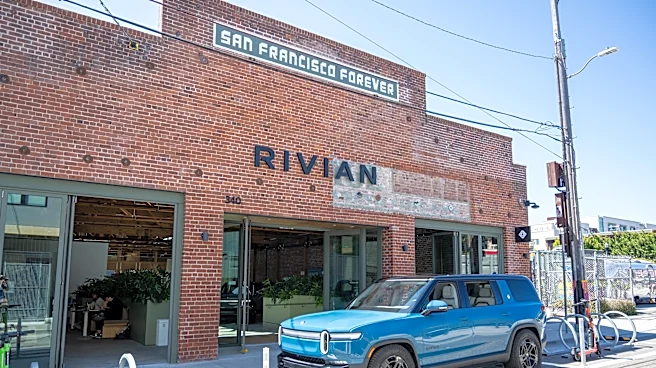
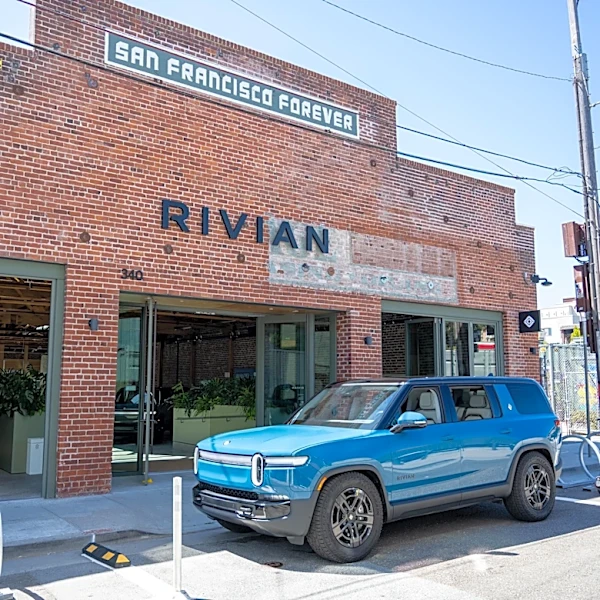
Rivian's software and services division reported a gross profit of $256 million in the third quarter, achieving a 42% margin. This contrasts with the company's automotive business, which incurred an $80 million loss during the same period. The software and services revenue
saw a 45% increase, reaching $605 million, accounting for approximately 28% of Rivian's total revenue of $2.155 billion. This growth is attributed to electrical-architecture and software-development work, repair and maintenance services, and Autonomy+ subscriptions. A substantial portion of this software profit, $354 million or 59%, originated from Rivian's joint venture with Volkswagen Group, primarily reflecting engineering work for Volkswagen brands that will integrate Rivian's zonal architecture starting in 2027. Rivian is actively investing in artificial intelligence (AI) and autonomy, with research and development (R&D) spending rising to $485 million, driven by these areas. The company recently acquired Third Dimension AI to enhance its closed-loop simulation capabilities and plans to provide further details at its upcoming Autonomy and AI Day on December 9.
Why It's Important?
This development highlights Rivian's strategic pivot towards software and services as a significant revenue and profit driver, potentially diversifying its business model beyond just vehicle manufacturing. The substantial gross profit from its software unit, especially in contrast to the automotive segment's loss, indicates a potential pathway to overall profitability and financial stability for the electric vehicle manufacturer. The strong contribution from the Volkswagen joint venture underscores the value of Rivian's technological expertise in software and electrical architecture, positioning it as a key partner in the broader automotive industry's transition to electric and autonomous vehicles. This could attract further partnerships and licensing opportunities, strengthening Rivian's market position. Furthermore, the focus on AI and autonomy, through offerings like Autonomy+ and the upcoming Point to Point feature, aims to create recurring revenue streams, which are highly valued by investors and can provide more predictable financial performance compared to cyclical vehicle sales.
What's Next?
Rivian plans to further expand its software offerings with the general release of its Point to Point feature to Autonomy+ subscribers in 2027, following a limited early-access rollout later this year. This feature will enable vehicles to handle full routes under supervision, including city streets and highways. The company will also host an Autonomy and AI Day on December 9 to elaborate on its advancements and strategies in these critical areas, which could provide more insight into future product roadmaps and revenue projections. The success of Autonomy+ and Point to Point in generating widespread adoption and recurring revenue will be crucial for Rivian's long-term financial health. Investors will be closely watching how Rivian balances its investments in software and autonomy with efforts to improve the profitability of its core automotive manufacturing business, especially as it aims to reduce its dependence on a single partner for software profits.
Beyond the Headlines
Rivian's emphasis on software and AI signifies a broader industry trend where vehicle manufacturers are transforming into technology companies. The ability to generate substantial profits from software and services, even while the hardware division faces losses, suggests a potential shift in how automotive companies are valued and how they generate revenue. This could lead to a future where the intellectual property and recurring revenue from software subscriptions become as, or even more, valuable than the physical vehicles themselves. The integration of AI and advanced autonomy features also raises complex ethical and regulatory questions regarding vehicle safety, liability, and data privacy, which will need to be addressed as these technologies become more prevalent. Rivian's strategy could set a precedent for other EV manufacturers looking to establish sustainable business models in a highly competitive and capital-intensive industry.