





What's Happening?
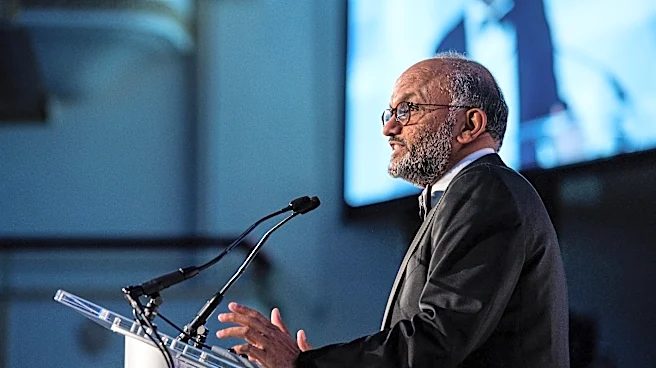
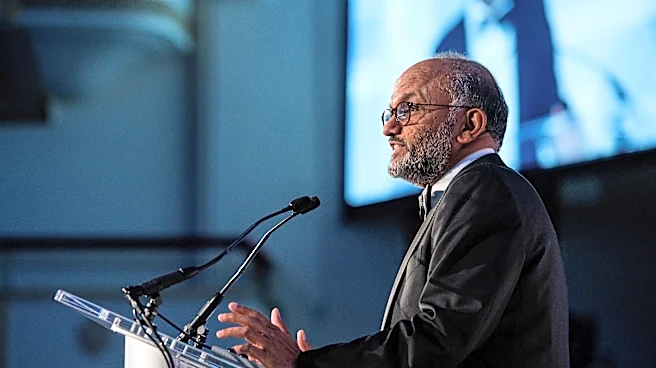
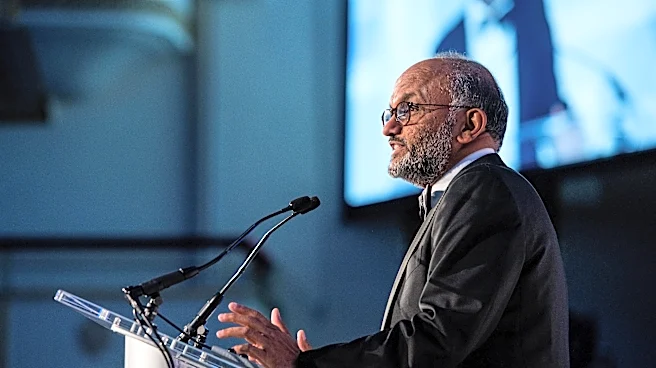
Adobe has announced a significant leadership transition, with Anil Chakravarthy set to assume the roles of President and Chief Executive Officer on December 1. Chakravarthy currently oversees the company's Customer Experience Orchestration business and global
field operations. Shantanu Narayen, the current CEO, will transition to the role of Executive Chair. This change was announced on September 3, with the company emphasizing that Narayen will collaborate with Chakravarthy during the transition period. The leadership shift is expected to bring a renewed focus on Adobe's artificial intelligence (AI) strategy and its subscription-based business models as the new CEO prepares to take the helm. Adobe, known for developing software and services that support creativity, productivity, and personalized customer experiences, serves consumers, creative professionals, and business customers through its subscription-based product portfolio.
Why It's Important?
This leadership change at Adobe is significant for several reasons, particularly concerning the company's strategic direction and market position. The transition places a strong emphasis on the execution of Adobe's AI strategy, indicating a potential acceleration in the integration of AI across its product offerings. This could lead to enhanced features and capabilities for its creative and business software, impacting a wide range of industries that rely on Adobe's tools, from marketing and design to content creation. Furthermore, the continued focus on subscription businesses underscores the importance of recurring revenue models for the company's financial stability and growth. Shantanu Narayen's move to Executive Chair ensures continuity at the board level, which can provide stability during the transition and help maintain investor confidence. The incoming CEO, Anil Chakravarthy, will be tasked with navigating a competitive technology landscape and driving innovation in key areas like customer experience orchestration, which is crucial for businesses seeking to personalize their interactions with clients.
What's Next?
As Anil Chakravarthy prepares to take over as President and CEO on December 1, the immediate focus will be on a smooth leadership transition. Shantanu Narayen's continued involvement as Executive Chair is designed to facilitate this process and ensure strategic alignment. The company is expected to provide further details on its AI strategy and how it plans to integrate these advancements into its core products and services under Chakravarthy's leadership. Stakeholders, including investors, customers, and employees, will be closely watching for any shifts in product development, market expansion, or operational strategies. The broader market, including the S&P 500, will also be a backdrop against which Adobe's performance and strategic decisions will be evaluated. The company's ability to effectively execute its AI and subscription business strategies will be critical for its continued growth and market leadership in the coming years.
Beyond the Headlines
The leadership transition at Adobe extends beyond a mere change in personnel; it reflects broader trends within the technology industry, particularly the increasing importance of artificial intelligence and subscription-based models. The emphasis on AI suggests that Adobe is positioning itself to leverage advanced analytics and machine learning to enhance user experience and product functionality, potentially setting new industry standards for creative and business software. This move could also signal a deeper integration of AI into customer experience management, transforming how businesses interact with their clients. The continuity provided by Shantanu Narayen as Executive Chair highlights the value of institutional knowledge and strategic oversight during periods of significant change. This transition could serve as a model for other large technology companies facing similar challenges in evolving their leadership and strategic focus to remain competitive in a rapidly changing digital landscape. The long-term implications could include a more AI-driven creative ecosystem and a further entrenchment of subscription models as the dominant paradigm for software delivery.