








What's Happening?
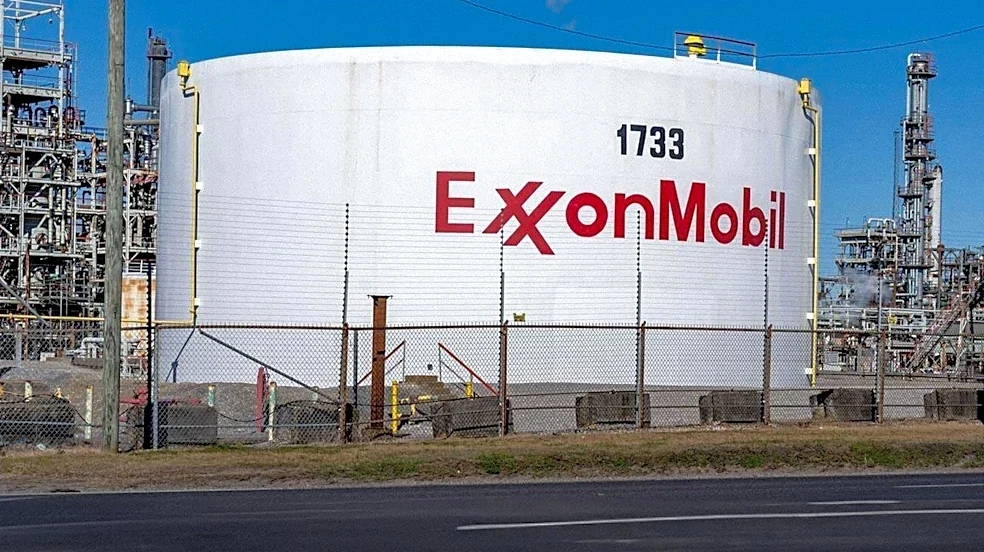
ExxonMobil has taken offline a 50,000-barrel-per-day (bpd) catalytic reformer at its Joliet, Illinois refinery, according to Wood Mackenzie. The shutdown occurred on October 20, with observers noting decreased stack activity and elevated flaring at the
facility. An ExxonMobil spokesperson confirmed an ongoing operational issue, emphasizing the company's focus on community and workforce safety, but provided no further details on the specific nature of the problem or its expected duration. This incident follows a two-week downtime at the refinery in September due to a power outage. The Joliet refinery is a significant fuel supplier for the U.S. Midwest, capable of producing approximately 11 million gallons per day of gasoline and diesel fuel. Catalytic reforming is a crucial process in petroleum refining, converting low-octane hydrocarbons into higher-octane reformate.
Why It's Important?
The shutdown of a catalytic reformer at ExxonMobil's Joliet refinery carries significant implications for the U.S. Midwest's fuel supply and the broader energy market. As a major producer of gasoline and diesel, any disruption at this 275,000-bpd facility can impact regional fuel availability and prices. The incident occurs during a period of tight global fuel markets, exacerbated by international conflicts and attacks on refineries, which could amplify the effects of this domestic operational issue. Consumers in the Midwest might face increased fuel costs or potential supply chain pressures if the shutdown is prolonged. For ExxonMobil, resolving the operational issue quickly is crucial to minimize financial impact and maintain its supply commitments in a sensitive market environment. The repeated operational issues, including a prior power outage, could also raise concerns about the refinery's reliability and maintenance practices.
What's Next?
ExxonMobil is currently working to resolve the operational issue at its Joliet refinery. The company has not provided a timeline for the reformer's return to service, but its priority remains the safety of the community and its workforce. Industry analysts, including Wood Mackenzie, will likely monitor the situation closely for updates on the duration of the shutdown and its potential impact on regional fuel inventories and pricing. Depending on the length of the outage, other refineries in the Midwest might need to increase production to compensate for any supply shortfalls. Regulatory bodies may also review the incident, especially given the previous power outage in September, to ensure compliance with safety and operational standards. The market will be watching for any official statements from ExxonMobil regarding the cause of the shutdown and its projected resolution.
Beyond the Headlines
Beyond the immediate concerns of fuel supply and pricing, this incident at the Joliet refinery highlights the inherent vulnerabilities within critical energy infrastructure. The reliance on large, centralized refining facilities means that operational disruptions, whether due to mechanical failure or external factors, can have cascading effects across regional economies. The repeated issues at this specific refinery, including the recent power outage, could prompt broader discussions within the industry and among policymakers about the resilience and redundancy of the U.S. fuel supply chain. It also underscores the environmental considerations associated with such facilities, as evidenced by the reported elevated flaring, which can lead to increased emissions. This event serves as a reminder of the delicate balance between energy production, economic stability, and environmental stewardship, particularly in a volatile global energy landscape.