







What's Happening?
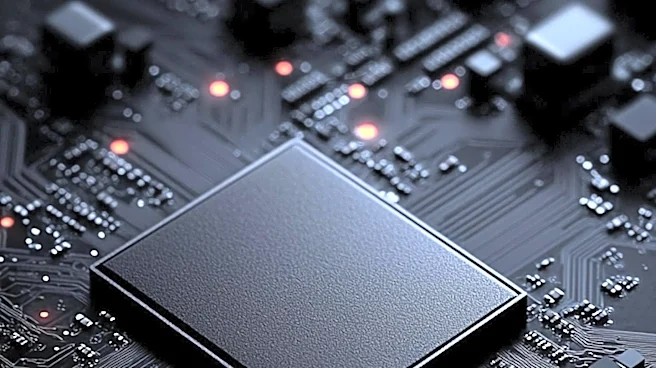
The global computer circuit boards market is projected to experience significant growth through 2035, driven by the rapid deployment of artificial intelligence infrastructure, hyperscale data centers, and industrial Internet of Things (IoT) networks.
According to IndexBox analysis, the market is expected to register a compound annual growth rate (CAGR) of approximately 5.2% from 2026 to 2035. Standard rigid boards continue to dominate the market, accounting for roughly 60% of global consumption. However, premium variants such as high-density interconnect (HDI), flexible, and rigid-flex boards are capturing an increasing share, growing at an estimated 7-9% CAGR due to demands for higher performance and miniaturization. The shift toward private-label and contract-manufactured boards is accelerating, with contract manufacturing now representing an estimated 35-40% of global procurement value.
Why It's Important?
The expansion of the computer circuit boards market is crucial for several industries, including data centers, telecommunications, and industrial automation. The proliferation of AI and machine learning workloads necessitates high-performance computing boards, which are essential for maintaining the efficiency and speed of data processing. The ongoing buildout of 5G and fiber-optic networks further drives demand for advanced circuit boards. Additionally, the increasing electrification and automation of industrial processes boost demand for ruggedized PCBs. This growth is expected to ease supply constraints in premium board segments, although challenges such as raw material cost volatility and environmental compliance remain.
What's Next?
The market is expected to continue its growth trajectory, supported by steady macroeconomic conditions and sustained capital expenditure in data center and telecommunications infrastructure. Capacity additions in East Asia are anticipated to gradually ease tightness in premium board segments. Environmental regulations will drive a shift toward halogen-free and high-temperature laminates, potentially accounting for 35-40% of new board specifications by 2030. Trade flows are likely to remain concentrated, with Asia-Pacific accounting for a significant portion of global production and consumption.
Beyond the Headlines
The structural shift toward environmentally compliant materials, such as halogen-free and high-temperature laminates, reflects broader industry trends towards sustainability. This transition is driven by regulations like the EU RoHS and PFAS restrictions, which aim to reduce environmental impact. The geopolitical landscape, including trade tensions and tariff uncertainties, may influence supply chains and sourcing costs, highlighting the need for strategic planning and diversification in procurement strategies.