




What's Happening?
Sara Russell, founder of Mainland Vintage Bath & Body Boutique in Brooklyn, NY, a small business specializing in bath and body products, has found a way to integrate AI into her operations while preserving her creative autonomy. Initially hesitant about
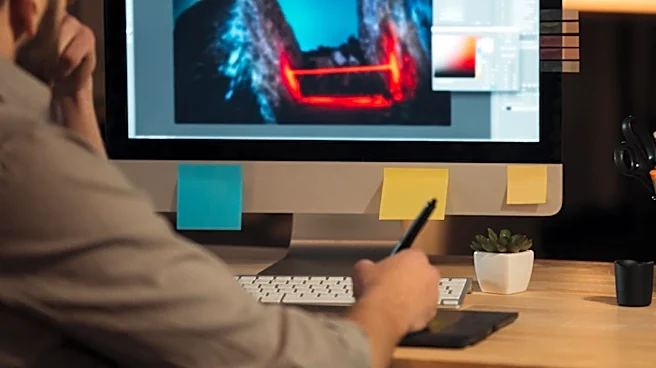
AI's impact on creative freedom, Russell began using Claude AI after a 'lightbulb moment' inspired by her husband's enterprise-level use. She now employs Claude to manage various business departments, treating its output as an 'entry-level employee' for tasks like interpreting sales data, developing marketing strategies, and organizing monthly recaps. Russell emphasizes that AI serves as a tool, not a partner, and she prioritizes human creativity, stating she would rather hire employees than upgrade her AI plan for more extensive use.
Why It's Important?
This development is important for the U.S. small business sector as it illustrates a practical and cautious approach to AI adoption among creative entrepreneurs. Many small business owners, particularly in creative fields, share Russell's initial hesitation regarding AI's potential to diminish human creativity or control. Her method demonstrates how AI can be strategically utilized for operational efficiency—such as data analysis, marketing planning, and administrative tasks—freeing up the founder to focus on core creative work. This model could serve as a blueprint for other small businesses looking to leverage AI's benefits without compromising their unique brand identity or artistic vision. It also highlights the growing accessibility of advanced AI tools for small enterprises, potentially leveling the playing field against larger competitors by enhancing productivity and strategic planning.
What's Next?
Russell's continued use of Claude AI will likely involve refining how she integrates its outputs into her decision-making processes, maintaining her 'CEO' role over the AI's 'entry-level employee' contributions. Her focus on using AI for organizational and analytical tasks, rather than creative generation, suggests a sustainable model for AI adoption in creative industries. As AI technology evolves, Russell will likely face ongoing decisions about upgrading her tools and balancing AI's capabilities with her commitment to human employment. Her concerns about the lack of government oversight, environmental impacts, and wealth disparities associated with AI indicate a critical awareness that may influence her future AI usage. This perspective could encourage other small business owners to consider the broader societal implications of their technology choices, fostering a more ethical and mindful approach to AI integration.
Beyond the Headlines
Sara Russell's experience with AI touches upon a deeper societal conversation about the role of technology in creative industries and the future of work. Her deliberate choice to use AI as a tool for efficiency rather than a replacement for creative input reflects a growing sentiment among artists and entrepreneurs who seek to harness AI's power without ceding their unique human touch. This approach challenges the narrative that AI will inevitably displace creative jobs, instead suggesting a collaborative model where AI augments human capabilities. The ethical concerns Russell raises—regarding environmental impact, wealth disparity, and regulation—underscore the need for a more responsible and sustainable development of AI. Her preference for hiring human employees over expanding AI usage, despite the efficiency gains, highlights the enduring value placed on human connection, creativity, and the social benefits of employment within the small business community. This perspective could influence consumer preferences and policy discussions around supporting human-centric business models in an increasingly AI-driven economy.