



What's Happening?
The Chicago Blackhawks have commenced the 2026-2027 NHL season with a challenging 4-8 record through their initial 12 games. Despite the return of captain Connor Bedard, who missed the first six games due to injury and currently ranks second on the team
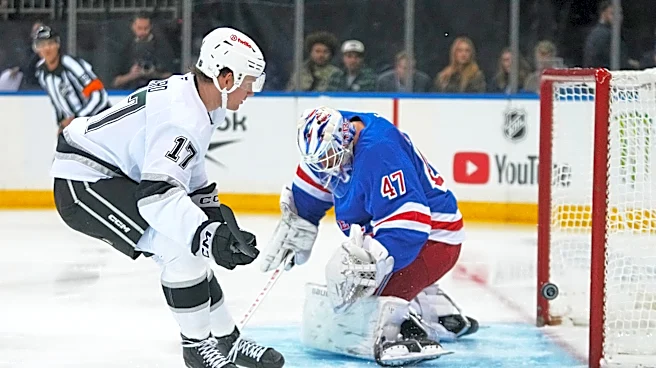
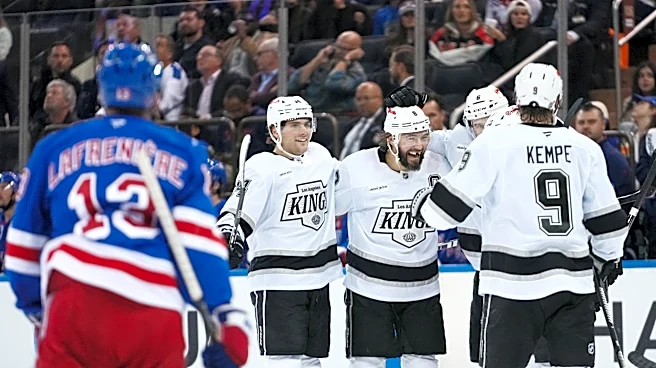
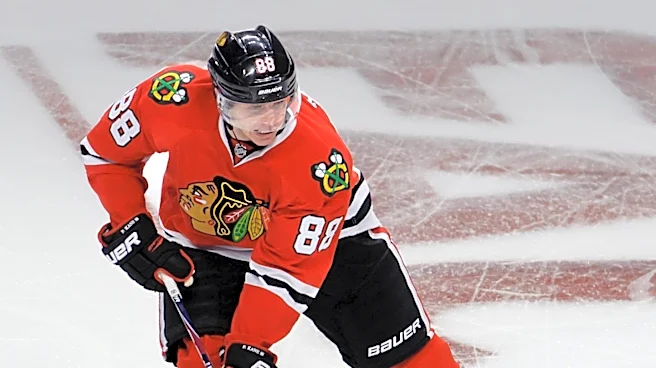
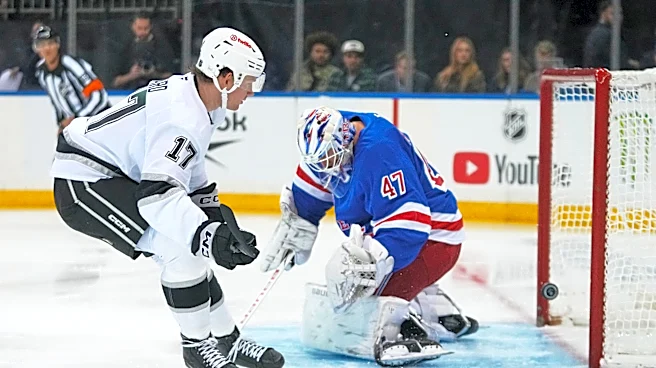
with two goals and four assists, the team's performance has not met management's expectations. General Manager Kyle Davidson is reportedly active in the trade market, seeking to acquire 'shoot-first, scoring wingers with size' to address the team's significant lack of offensive production. Patrick Kane leads the team with one goal and seven assists in 12 games, highlighting the scoring struggles. The Blackhawks recently secured a 2-1 victory against the Los Angeles Kings, demonstrating an improved all-around game. However, the overall slow start has intensified pressure on the team to perform after several seasons at the bottom of the league standings.
Why It's Important?
The Blackhawks' early season struggles and the potential for a major trade carry significant implications for the team's immediate future and long-term strategy. A substantial trade, as suggested by insider Frank Seravalli, could involve sacrificing core pieces like Frank Nazar or Oliver Moore, both of whom recently signed long-term extensions. This presents a dilemma for General Manager Kyle Davidson: balancing the urgency to improve the team's current performance with the need to maintain long-term success. Acquiring a high-caliber offensive player could provide the much-needed scoring spark and potentially elevate the team out of its current slump. Conversely, giving up promising young talent could hinder future development and prolong the rebuilding process. The decision will reflect the organization's assessment of its current competitive window and its willingness to accelerate its timeline for contention, impacting fan engagement and the team's financial outlook.
What's Next?
General Manager Kyle Davidson is expected to continue actively exploring trade opportunities to bolster the Blackhawks' offense. The Philadelphia Flyers have been identified as a potential trade partner, with the Flyers reportedly interested in Blackhawks prospects Frank Nazar and Oliver Moore. The immediate next steps will likely involve ongoing discussions between Davidson and other teams to identify suitable trade packages. The Blackhawks must weigh the benefits of acquiring an impactful scorer against the cost of parting with valuable young players. The team's performance in upcoming games will also play a crucial role in determining the urgency and scale of any potential moves. A continued struggle could push Davidson towards a more aggressive approach, while a sustained period of improved play might allow for more measured decisions. The outcome of these trade talks will significantly shape the Blackhawks' roster for the remainder of the 2026-2027 season and beyond.
Beyond the Headlines
The Blackhawks' current situation extends beyond mere on-ice performance, touching upon the broader philosophy of team building in professional sports. The tension between short-term gains and long-term sustainability is a recurring theme for franchises undergoing a rebuild. Davidson's decision regarding a major trade will not only impact the team's immediate competitiveness but also send a clear message about the organization's commitment to its current core players and its vision for future success. The pressure to perform, especially for a storied franchise like the Blackhawks, can lead to difficult choices that have lasting repercussions on team culture, player development, and fan loyalty. This scenario highlights the intricate balance general managers must strike between satisfying immediate expectations and adhering to a strategic plan for sustained excellence, often under intense public scrutiny.