





What's Happening?
Taiwan Semiconductor Manufacturing Company Limited (TSM) saw its stock price fall by 9.48% from its previous closing price, reaching $318.710 as of November 20, 2026. This decline contributed to a 21.53% drop in the stock price for the month of November.
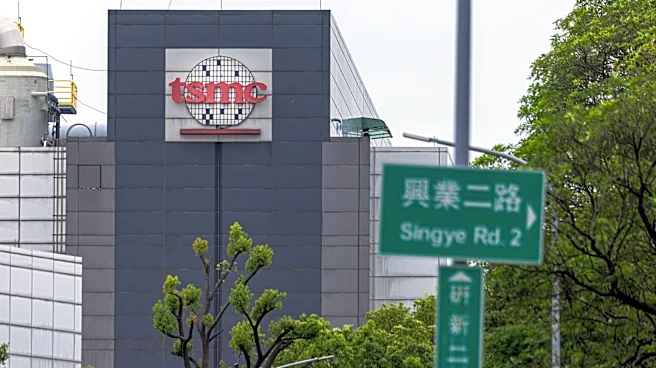
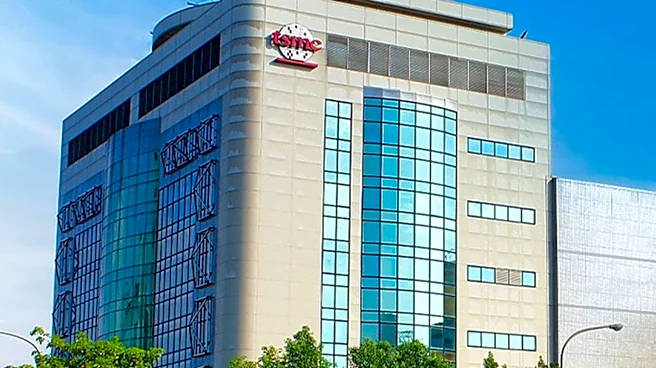
The company's price-earnings (P/E) ratio currently stands at 104.2, which is considerably higher than the Semiconductors & Semiconductor Equipment industry median of 35.3. During the last market session, TSM's stock traded between $318.481 and $343.750. The company, headquartered in Hsinchu City, Taiwan, manufactures, packages, tests, and sells integrated circuits and other semiconductor devices globally, with products used in high-performance computing, smartphones, and automotive industries.
Why It's Important?
The substantial drop in TSM's stock price and its high P/E ratio signal potential market concerns regarding its valuation and future performance within the semiconductor industry. A high P/E ratio suggests that investors have high expectations for future earnings, and a significant stock decline can indicate a reassessment of these expectations. Given TSM's critical role as a leading semiconductor foundry, its stock performance can influence the broader technology market, affecting companies that rely on its advanced wafer fabrication processes. The volatility highlights the sensitivity of the semiconductor sector to market sentiment, analyst downgrades, and broader economic factors, impacting investor confidence and potentially leading to shifts in investment strategies.
What's Next?
Investors will be closely monitoring TSM's financial health and valuation metrics, particularly its P/E ratio, to determine if the current stock price represents a buying opportunity or a continued risk. Analyst opinions, including any further upgrades or downgrades, will play a significant role in shaping market perception. The company's ability to maintain its market position and address any underlying issues contributing to the stock decline will be crucial. Furthermore, the broader economic environment and demand for semiconductor products in key sectors like high-performance computing and smartphones will influence TSM's recovery and future growth trajectory. The company's ongoing investment in technology start-ups and research also indicates a long-term strategy for innovation.
Beyond the Headlines
The current market behavior surrounding TSM's stock underscores the inherent risks and opportunities within the highly competitive and capital-intensive semiconductor industry. The company's extensive global operations, spanning Taiwan, China, Europe, the Middle East, Africa, Japan, and the United States, expose it to diverse geopolitical and economic pressures. The high P/E ratio, while indicating investor optimism, also suggests a potential for significant corrections if earnings growth does not meet expectations. This situation highlights the importance of comprehensive financial analysis beyond single metrics, encouraging investors to consider a range of factors, including valuation, growth, quality, and earnings estimates, to make informed decisions in this dynamic sector.