






What's Happening?
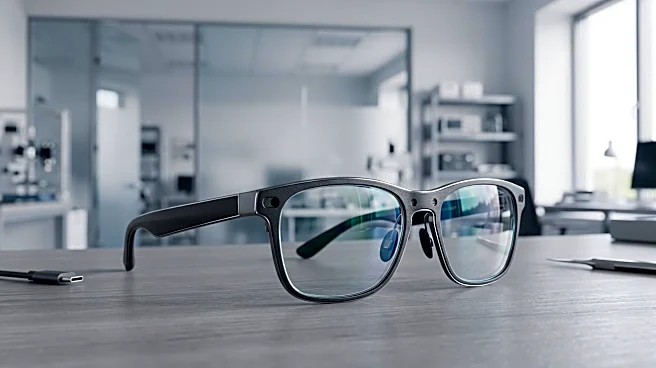
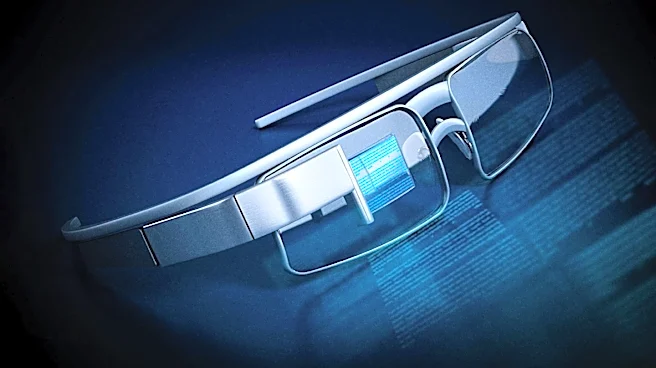
Snap Inc. is promoting its Spectacles AR glasses as a new tool for travelers, enabling hands-free navigation, language translation, and access to information without the need to constantly check a smartphone. These augmented reality glasses project directions,
translations, and other travel-related data directly into a transparent display, allowing users to remain engaged with their surroundings. The technology aims to reduce screen time while exploring new locations, providing a more seamless travel experience. The Spectacles feature a 51-degree field of view, can display 16 million colors, and include built-in stereo speakers and microphones for voice interactions. Adaptive electrochromic lenses adjust to changing light conditions, supporting all-day wear. Snap's personal intelligence service, Specs Intelligence, is designed to connect information across devices and applications, surfacing relevant data proactively.
Why It's Important?
This development is significant for the travel and technology industries, as it introduces a new paradigm for how individuals interact with digital information while on the go. By offering a hands-free alternative to smartphones, Snap's Spectacles could enhance traveler safety and immersion, allowing them to focus more on their environment rather than their devices. For businesses in the travel sector, this technology presents opportunities for new services and applications, such as augmented reality tours or real-time information delivery. The integration of AI and AR capabilities could also set a new standard for user experience in navigation and information access, potentially influencing future product development across the tech landscape. Consumers stand to gain a more intuitive and less distracting way to explore unfamiliar places, while tech companies will be watching to see if this approach gains widespread adoption.
What's Next?
The adoption rate of Snap's Spectacles by travelers will be a key indicator of the technology's future success. If the hands-free navigation and translation features prove to be genuinely useful and convenient, it could accelerate the development and market penetration of AR glasses in various consumer segments. Other tech companies may follow suit, investing more heavily in similar augmented reality solutions for travel and daily life. Further enhancements to AI integration and battery life will likely be critical for broader appeal. The ongoing evolution of Specs Intelligence, connecting information across multiple devices, suggests a future where personal data and contextual information are seamlessly integrated into daily experiences, potentially leading to a more interconnected digital ecosystem for users.
Beyond the Headlines
The shift from smartphone-centric interaction to hands-free AR experiences raises deeper questions about human-technology interaction and the future of digital immersion. While the immediate benefit is reduced screen time, the constant overlay of digital information onto the physical world could subtly alter how individuals perceive and engage with their surroundings. Ethical considerations regarding data privacy, the potential for information overload, and the impact on social interactions in public spaces will become increasingly relevant as AR technology becomes more pervasive. This technology also highlights a broader trend towards 'invisible computing,' where technology recedes into the background, becoming an extension of human perception rather than a separate device. The long-term cultural implications of such seamless digital integration remain to be fully understood.