




What's Happening?
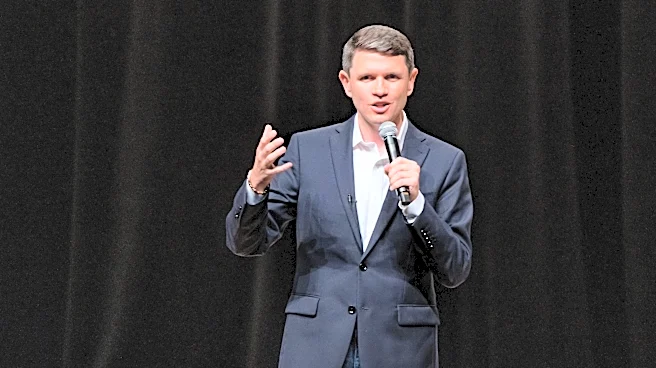
Ambrosia Energy has commenced construction on a 10 GWh battery factory near Austin, Texas. This facility is designed to produce batteries specifically for Ambrosia’s off-grid data center power plants. Co-founder and CEO Ben Longmier announced the project,
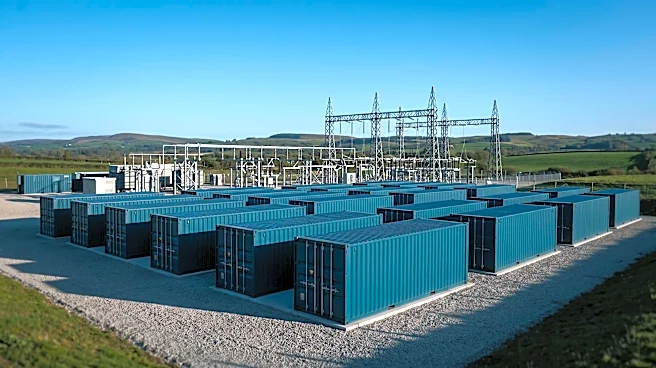
stating that the 150,000-square-foot factory is expected to reach full production within two to three years. Once operational, the factory will enable Ambrosia to construct approximately one 300-megawatt power plant annually at its field sites. Ambrosia emerged from stealth in June with a strategy to build data center power plants at a cost of $100 per megawatt-hour, utilizing solar power paired with batteries as the most cost-effective and rapidly deployable solution. The company's model involves solar panels charging batteries during the day, with batteries supplying power at night and on cloudy days to ensure continuous data center operation. Ambrosia is also starting work on its first commercial power plant in West Texas later this year, which will combine 300 megawatts of solar panels with 660 megawatt-hours of batteries to provide 30 megawatts of continuous power with a target uptime of 99.3%.
Why It's Important?
This initiative by Ambrosia Energy is significant for the U.S. energy and technology sectors, particularly in addressing the growing power demands of data centers. By establishing a dedicated battery manufacturing facility, Ambrosia aims to reduce costs and increase the efficiency of its off-grid power solutions, making them competitive with traditional natural gas turbines. This move could accelerate the adoption of renewable energy sources for data centers, contributing to sustainability goals and reducing reliance on conventional power grids. The factory's capacity to support the construction of one 300-megawatt power plant per year signifies a substantial scaling of renewable energy infrastructure for critical digital operations. Furthermore, by manufacturing components in-house and simplifying designs, Ambrosia is demonstrating a model for cost reduction in renewable energy deployment, which could influence broader industry practices and make clean energy solutions more accessible and economically viable for other large-scale consumers.
What's Next?
Ambrosia Energy anticipates its new battery factory near Austin, Texas, will achieve full production capacity within the next two to three years. Concurrently, the company is initiating work on its first commercial power plant in West Texas later this year. This facility is designed to integrate 300 megawatts of solar panels with 660 megawatt-hours of batteries, aiming to deliver 30 megawatts of continuous power with a high uptime target of 99.3%. The successful deployment and operation of this commercial power plant will serve as a critical proof of concept for Ambrosia's business model, demonstrating its ability to provide reliable and cost-effective off-grid power to data centers. As the factory scales up production, Ambrosia plans to expand its deployment of these integrated solar-plus-battery power plants, potentially attracting more data center clients seeking sustainable and independent energy solutions. The company's progress will be closely watched by both the renewable energy and data center industries as a potential model for future infrastructure development.
Beyond the Headlines
Ambrosia Energy's strategy of vertically integrating battery manufacturing with off-grid power plant development represents a significant shift in how large-scale energy consumers, particularly data centers, might secure their power. This approach not only addresses the immediate need for reliable and sustainable energy but also mitigates risks associated with grid instability and rising energy costs. The company's focus on simplifying components and in-house manufacturing could disrupt traditional supply chains in the renewable energy sector, fostering greater innovation in design and production efficiency. Ethically, this model promotes energy independence and reduces the carbon footprint of data centers, aligning with global sustainability goals. Legally, it may prompt new regulatory frameworks for off-grid energy systems and their integration with existing infrastructure. Culturally, it reinforces the growing trend towards decentralized energy solutions and could inspire other industries to explore similar self-sufficient power generation models, ultimately contributing to a more resilient and sustainable energy landscape.