






What's Happening?
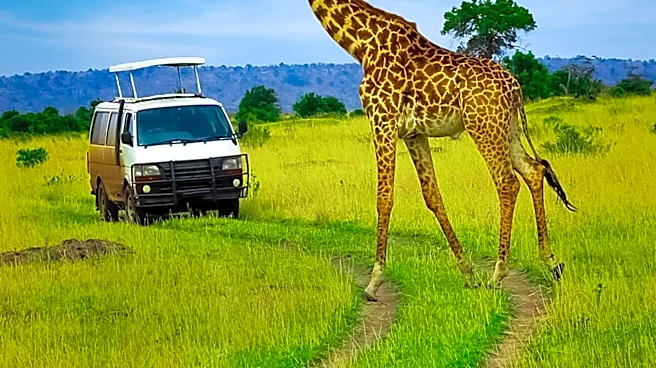
MT Sobek, an adventure travel company, is providing guidance on how to experience a Tanzania safari without encountering large crowds, addressing concerns about over-tourism in popular destinations. The company emphasizes that finding a quiet safari experience depends
on the timing of travel, the specific locations chosen, and the expertise of the guide. They recommend traveling during less crowded periods such as January and February (calving season), March, June, late October, and early December. MT Sobek's approach involves guides seeking out wildlife on quieter tracks rather than relying on radio calls that often lead to multiple vehicles converging on a single sighting. They also suggest combining popular areas with quieter corners of the Serengeti and considering less-traveled national parks like Ruaha, Katavi, Mahale, or Nyerere.
Why It's Important?
The issue of over-tourism in popular safari destinations like Tanzania has significant implications for both the environment and the quality of the tourist experience. Crowded safari routes can stress wildlife, diminish the natural ambiance for visitors, and contribute to environmental degradation. MT Sobek's strategies highlight a growing awareness within the travel industry to promote sustainable tourism practices. By encouraging travel during off-peak seasons and utilizing experienced guides who prioritize less-trafficked areas, the company aims to mitigate the negative impacts of mass tourism. This approach could influence other tour operators to adopt similar practices, potentially leading to a more balanced distribution of tourists and a better preservation of natural habitats, while also enhancing the authentic safari experience for travelers.
What's Next?
As awareness of over-tourism grows, it is likely that more tour operators will begin to offer 'off-the-beaten-path' or 'sustainable' safari options. This could lead to a diversification of tourism offerings in Tanzania, with increased focus on lesser-known parks and community-based tourism initiatives. Government and conservation organizations may also implement stricter regulations on vehicle numbers in popular areas and promote responsible tourism guidelines. Travelers, in turn, may become more discerning, prioritizing ethical and less crowded experiences over peak-season travel to iconic sites. The long-term success of these strategies will depend on their ability to balance economic benefits from tourism with the imperative of environmental and wildlife conservation, potentially leading to a more resilient and sustainable tourism model for Tanzania.
Beyond the Headlines
The shift towards uncrowded safari experiences touches upon deeper ethical and cultural considerations within the tourism industry. Ethically, it raises questions about the responsibility of tourists and tour operators to minimize their environmental footprint and respect local cultures. Culturally, promoting less-visited areas can bring economic benefits to local communities that have not traditionally profited from mainstream tourism, fostering more equitable development. There's also an aesthetic dimension: the desire for an 'authentic' wilderness experience, free from the visual and auditory clutter of other tourists, reflects a broader societal yearning for connection with nature. This trend could also spur innovation in conservation funding, with a portion of tourism revenue potentially being directed towards protecting these quieter, more vulnerable ecosystems, ensuring their preservation for future generations.