






What's Happening?
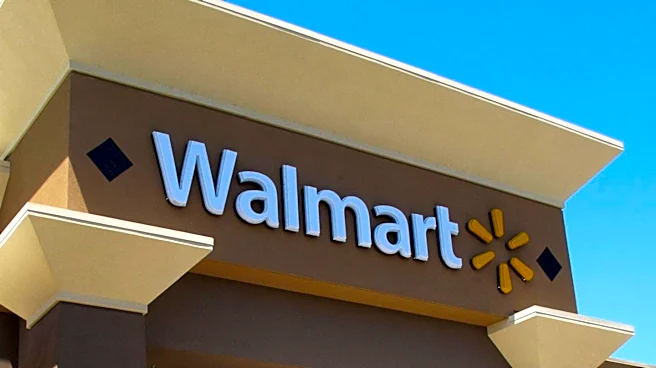
Walmart has reportedly received a tariff refund following a U.S. Supreme Court ruling that struck down an earlier tariff regime. The retailer intends to utilize these funds to implement price rollbacks on store shelves, rather than directly incorporating
the refund into its earnings. This strategy aims to boost customer traffic and loyalty by offering lower prices. The refund stems from import duties previously collected under the invalidated tariff system, making importers across the economy, including Walmart, eligible for reimbursement. This move aligns with Walmart's core business model, which emphasizes scale, extensive procurement volumes, and a low-cost logistics network to maintain its promise of everyday low prices. The company is also expanding its app-based delivery services, recently integrating Dunkin' into its Express Delivery service, building on an earlier Subway integration, to deepen app usage and enhance convenience for customers.
Why It's Important?
Walmart's decision to pass on tariff refunds to consumers through price reductions could significantly impact household budgets, particularly for lower-earnings households already facing strain from housing costs, elevated credit card interest rates, and slower job growth. By prioritizing price cuts over immediate margin gains, Walmart aims to strengthen its competitive position, potentially drawing more customers and fostering loyalty in a challenging economic environment. This strategy underscores the critical role of pricing in the retail sector, especially for a company like Walmart, where price is central to its value proposition. The move also highlights the broader economic implications of tariff policies and Supreme Court rulings on import duties, demonstrating how such decisions can directly influence consumer prices and corporate strategies in the retail industry.
What's Next?
Market participants will closely monitor Walmart's upcoming quarterly earnings update for details on how much of the tariff refund was allocated to price reductions and its subsequent impact on gross margins. Commentary on comparable sales, ticket versus transaction trends, and the growth pace of advertising and marketplace revenue relative to store sales will also be key. Updates on the expansion of restaurant delivery services, including the number of participating locations, order frequency, bundle rates with groceries, and delivery times, will indicate whether this initiative is a niche convenience or a significant traffic driver. These metrics will provide further clarity on Walmart's outlook and the effectiveness of its strategy to leverage the tariff refund for consumer benefit and market share growth.
Beyond the Headlines
The broader implications of Walmart's tariff refund strategy extend to the competitive landscape of the retail industry. By aggressively lowering prices, Walmart could exert pressure on competitors, potentially leading to a wider trend of price adjustments across the sector. This move also highlights the ongoing debate about the impact of tariffs on consumer costs and corporate profitability. While the refund offers a temporary boost to consumers, the sustainability of low prices remains a long-term challenge, especially given persistent cost pressures from factors like higher sugar and cocoa costs, packaging expenses, and transportation. The decision to invest in price rollbacks rather than solely boosting earnings reflects a strategic choice to prioritize market share and customer retention, signaling a potentially more aggressive stance in the competitive retail environment.