
What's Happening?
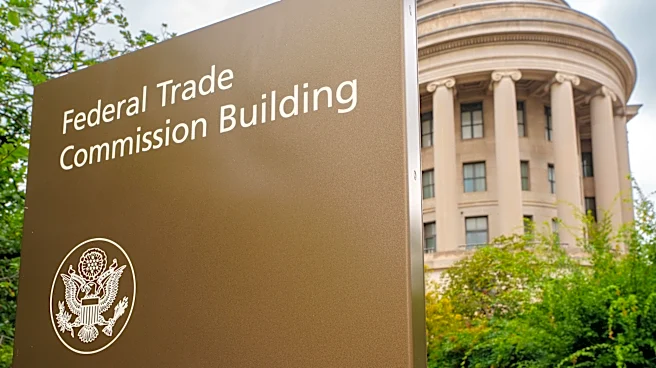
The Federal Trade Commission (FTC) has reached a $100 million settlement with the ultra-fast fashion retailer SHEIN, addressing a complaint filed in the U.S. District Court for the Central District of
California on November 24. The FTC accused SHEIN of engaging in a range of unfair and deceptive business practices. These allegations include failing to adhere to federal shipping requirements, suppressing negative product reviews, providing inadequate customer service, and making unsubstantiated claims regarding its suppliers and cotton traceability. The settlement aims to provide monetary relief to consumers and implement significant changes to SHEIN's U.S. business operations, including mandating improved customer service channels, restricting review moderation practices, and requiring substantiation for supplier audit and cotton traceability claims.
Why It's Important?
This settlement serves as a significant warning to online retailers, extending beyond the fast fashion sector, about the legal and operational challenges of scaling e-commerce businesses. The FTC's case highlights that companies risk violating federal consumer protection laws when their sales capacity outpaces their ability to fulfill orders, process refunds, and resolve customer complaints. The allegations concerning suppressed negative reviews and unsubstantiated supply chain claims underscore the FTC's focus on transparency and accuracy in consumer information, aiming to prevent artificial diversion of consumer demand. For consumers, the settlement ensures better protection against deceptive practices and improved recourse for issues. For businesses, it emphasizes the necessity of robust investment in customer service, supplier oversight, and advertising substantiation to maintain compliance and avoid substantial penalties and reputational damage.
What's Next?
Under the proposed order, SHEIN will be required to establish both written and verbal customer service channels, commit to responding within a commercially reasonable timeframe, and grant consumers a one-week period to contest complaint resolutions before closure. The company will also face restrictions on its product review moderation practices, ensuring that all reviews are treated fairly. Furthermore, SHEIN must substantiate all claims related to supplier audits and cotton traceability, providing verifiable evidence for its marketing representations. The settlement, if approved by the court, will impose permanent restrictions on aspects of SHEIN's U.S. operations and subject the company to 15 years of compliance monitoring. While SHEIN has stated that the agreement does not constitute an admission of liability, it has agreed to implement additional measures to strengthen its consumer practices and compliance efforts.
Beyond the Headlines
The FTC's action against SHEIN reflects a broader regulatory push to address the practices of ultra-fast fashion and large online retailers. The case's focus on existing consumer protection laws, rather than new legislation, demonstrates the applicability of current regulations to modern e-commerce models. This could encourage other regulatory bodies to scrutinize similar business models that prioritize rapid growth and low costs over consumer protection and ethical supply chain practices. The emphasis on cotton traceability and supplier audits also touches upon growing concerns about forced labor and environmental impact within global supply chains, even if the FTC's claims did not directly hinge on forced labor. This settlement may prompt a re-evaluation of marketing claims and operational transparency across the retail industry, potentially leading to higher standards for corporate accountability and consumer trust.