



What's Happening?
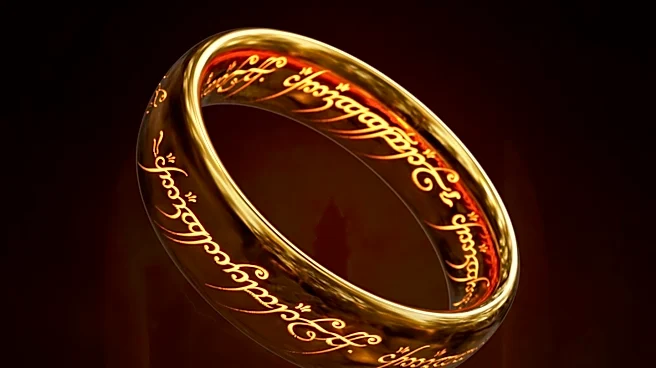
The third season of 'The Lord of the Rings: The Rings of Power' on Prime Video has concluded, featuring the forging of the One Ring by Sauron. Despite this significant event, the season finale, titled 'The Doom of Men,' presented an unexpected turn: Sauron's
surrender to the Númenórean army. This development diverged from anticipated major battles, with the narrative focusing more on Gandalf and Pallando. The season also explored Galadriel's journey, the re-introduction of Celeborn, and a Dwarven succession crisis. While some episodes were praised for strong openings and character development, the finale received criticism for an anticlimactic resolution and a perceived shift in focus away from central plotlines.
Why It's Important?
The conclusion of 'The Rings of Power' Season 3 is significant for its adaptation of J.R.R. Tolkien's Second Age, particularly the forging of the One Ring, a pivotal moment in Middle-earth lore. The show's creative decisions, such as Sauron's surrender to Númenor without a major battle, could influence future adaptations of established fantasy narratives, potentially setting new precedents for how beloved stories are interpreted for television. For Prime Video, the series represents a substantial investment in high-fantasy content, and audience reception to these narrative choices will impact its strategy for future seasons and similar projects. The series' performance also reflects on the broader trend of streaming platforms investing in large-scale, pre-existing intellectual properties to attract and retain subscribers.
What's Next?
The series 'The Lord of the Rings: The Rings of Power' has been renewed for a fourth season, with filming expected to commence in spring 2027. This renewal indicates Prime Video's continued commitment to the franchise despite mixed reactions to the third season's narrative choices. Future seasons will likely explore the consequences of Sauron's forging of the One Ring and his strategic surrender to Númenor. Viewers can anticipate further development of storylines involving Gandalf, Galadriel, and the various factions within Middle-earth. The long gap between seasons suggests a meticulous production process, aiming to address past criticisms and build upon the established lore.
Beyond the Headlines
The narrative choices in 'The Rings of Power' Season 3, particularly the unexpected surrender of Sauron, raise questions about the balance between faithfulness to source material and creative adaptation in large-scale fantasy productions. The show's tendency to incorporate elements from Peter Jackson's 'Lord of the Rings' films, while also deviating from Tolkien's legendarium in certain aspects, highlights the challenges of satisfying both long-time fans and new audiences. The critical reception of the finale, which prioritized character arcs like Gandalf's over anticipated epic battles, could spark broader discussions within the entertainment industry about audience expectations for high-stakes fantasy conclusions and the role of character-driven storytelling versus grand spectacle.