


What's Happening?
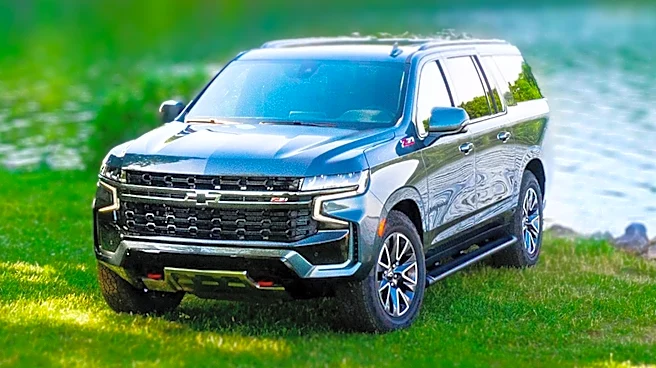
The 2027 Chevrolet Tahoe is designed to offer enhanced towing capabilities for U.S. drivers, combining passenger practicality with significant pulling strength. Most models feature a V-8 engine, including a 355-horsepower 5.3-liter V-8 or an available
420-horsepower 6.2-liter V-8, both paired with a 10-speed automatic transmission. An optional 3.0-liter diesel inline-six engine is also available, providing 305 horsepower and 495 pound-feet of torque. The Tahoe can tow up to 8400 pounds when properly equipped. Chevrolet has integrated advanced trailering technology, such as available trailering assist features, a trailer-tire monitoring system, and route planning based on trailer size. The Sun and Tow Package now includes a trailering camera system and is bundled with the Max Trailering Package on Premier and High Country models, offering comprehensive support for towing.
Why It's Important?
The focus on advanced towing technology in the 2027 Chevrolet Tahoe addresses a critical need for many U.S. families and small business owners who rely on full-size SUVs for both daily transport and heavy-duty tasks. By integrating features like trailering camera systems and route planning, Chevrolet aims to make towing more accessible and less stressful, potentially expanding the market for large SUVs among those who might otherwise opt for pickup trucks. This development impacts the automotive industry by setting new standards for SUV utility and safety, influencing competitors to enhance their own towing-assist technologies. For consumers, it means greater confidence and convenience when hauling boats, campers, or utility trailers, directly benefiting recreational activities and various professional applications across the country.
What's Next?
The introduction of sophisticated trailering technology in vehicles like the 2027 Chevrolet Tahoe is likely to spur further innovation in the SUV segment. Other manufacturers may follow suit, integrating similar or more advanced systems to compete in the utility vehicle market. This could lead to a broader adoption of smart towing features, making them standard in more models. Consumers can expect continued improvements in vehicle-trailer integration, potentially including autonomous trailering functions or more intuitive user interfaces. The emphasis on safety and ease of use in towing will likely remain a key focus for automotive engineers and designers in the coming years, driven by consumer demand and regulatory considerations.
Beyond the Headlines
The evolution of towing technology in vehicles like the Tahoe reflects a broader societal trend towards multi-functional vehicles that can seamlessly transition between family transport and demanding utility roles. This shift highlights the changing needs of American consumers who seek versatility and capability without compromising comfort or safety. The integration of advanced driver-assistance systems specifically tailored for towing also raises questions about the future of vehicle autonomy in complex scenarios. As these technologies become more prevalent, they could redefine the skill sets required for towing, potentially lowering the barrier to entry for new users while enhancing safety for all. This also underscores the increasing reliance on technology to augment human capabilities in everyday tasks.