







What's Happening?
Breakwater Capital Group has substantially increased its holdings in Capital One Financial Corporation (NYSE:COF), according to its most recent Form 13F filing with the Securities and Exchange Commission. During the third quarter, the investment firm
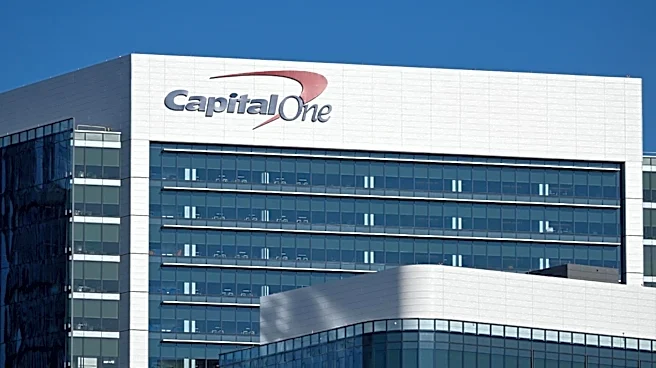
grew its stake by 373.4%, acquiring an additional 7,368 shares. This purchase brought Breakwater Capital Group's total ownership to 9,341 shares of Capital One Financial, valued at approximately $1,803,000 at the close of the quarter. This move reflects a notable increase in confidence or strategic positioning by Breakwater Capital Group in the diversified financial services provider. Capital One Financial, headquartered in McLean, Virginia, offers a range of services including credit cards, consumer banking products, auto financing, and commercial banking services primarily in the United States, with additional operations in Canada and the United Kingdom. The company was founded in 1994.
Why It's Important?
This significant increase in investment by Breakwater Capital Group in Capital One Financial Corporation is important as it signals a strong bullish sentiment from an institutional investor towards a major U.S. financial institution. Such large-scale investments can influence market perception and potentially attract further institutional and retail investment, impacting Capital One's stock performance. For Capital One, increased institutional ownership can provide stability and validate its business model and future prospects. The financial services sector, particularly large diversified banks like Capital One, plays a crucial role in the U.S. economy by providing essential credit and banking services to consumers and businesses. A vote of confidence from investment groups like Breakwater Capital Group can reflect broader trends in the financial market, indicating optimism about economic stability and growth, or specific strengths within Capital One's operations, such as its credit card or commercial banking segments. This could also suggest that Breakwater Capital Group sees value in Capital One's current valuation or its strategic initiatives.
What's Next?
Following Breakwater Capital Group's increased stake, market observers will likely monitor Capital One Financial Corporation's stock performance and future institutional filings to see if other major investors follow suit. Capital One will continue its operations, focusing on its core offerings of credit cards, consumer banking, auto financing, and commercial banking services. The company's upcoming earnings reports and financial disclosures will be closely watched for insights into its profitability, growth strategies, and overall financial health, which could further justify or challenge Breakwater Capital Group's investment decision. Analysts will also continue to provide ratings and price targets, which could be influenced by such significant institutional movements. Any further substantial changes in institutional ownership could indicate shifting sentiment towards the financial sector or Capital One specifically. The company's performance in its U.S. and international markets will be key to sustaining investor confidence.
Beyond the Headlines
Beyond the immediate financial implications, Breakwater Capital Group's increased investment in Capital One Financial Corporation highlights the ongoing strategic evaluations by investment firms in the dynamic U.S. financial landscape. This move could reflect a belief in the resilience of traditional banking services amidst evolving digital finance trends, or a strategic bet on Capital One's ability to adapt and innovate within its diversified portfolio. It also underscores the role of institutional investors in shaping the market and influencing corporate valuations. The decision to significantly boost holdings in a company like Capital One, which operates across various consumer and commercial financial segments, suggests a nuanced understanding of the broader economic environment and the potential for growth in specific financial product areas. This could also be part of a larger trend of institutional investors re-evaluating their positions in established financial giants, seeking stable returns in a potentially volatile market.