




What's Happening?
Tokyo Electron Limited is identified as a significant entity in the epitaxy equipment market, a crucial sector for advanced semiconductor manufacturing. The company is recognized for its expertise in thermal processing and epitaxial reactors, which are
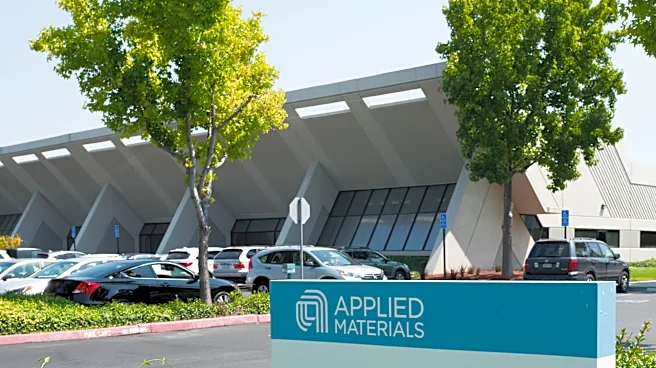
essential for high-volume fabrication plants. This market is characterized by several influential players, including Applied Materials, known for its deposition and epitaxial systems, and Aixtron, which specializes in MOCVD equipment for compound semiconductors used in LEDs and power electronics. Other notable companies in this space include II-VI Incorporated (now part of Coherent), Intelligent Epitaxy Technology, DOWA Electronics Materials, Optowell, Toshiba Electronic, and Siltronic. These companies collectively shape the technological trajectory of compound semiconductor manufacturing by focusing on process technology, deposition uniformity, defect density control, and R&D investments. Their contributions are vital for emerging materials like gallium nitride and silicon carbide, supporting high-growth end-users in power electronics, RF, and photonics.
Why It's Important?
The epitaxy equipment market is foundational to the global semiconductor industry, which in turn underpins a vast array of modern technologies, from consumer electronics to advanced defense systems. The prominence of companies like Tokyo Electron in this sector directly impacts the efficiency, cost, and innovation capabilities of semiconductor manufacturers worldwide. For the U.S., a robust and competitive epitaxy equipment market ensures access to critical components for its domestic semiconductor production, reducing reliance on foreign supply chains and bolstering national security. The advancements made by these companies in process technology and material science are crucial for developing next-generation devices, influencing everything from faster computing to more efficient power management. U.S. technology companies and consumers stand to benefit from the continuous innovation and improved performance of semiconductors, while U.S. policymakers are keen on fostering domestic capabilities in this strategic industry to maintain technological leadership and economic competitiveness.
What's Next?
The epitaxy equipment market is expected to continue its growth trajectory, driven by increasing demand for advanced semiconductors across various applications. Companies like Tokyo Electron will likely focus on further refining their thermal processing and epitaxial reactor technologies to meet the evolving demands of semiconductor manufacturing, particularly for smaller nodes and new materials. Continued R&D investments and strategic partnerships with material suppliers will be critical for these firms to offer comprehensive solutions for emerging technologies such as gallium nitride and silicon carbide. The industry will also likely see ongoing efforts to enhance deposition uniformity and defect density control, which are paramount for improving yield and reducing costs in high-volume fabrication. The competitive landscape will continue to evolve, with companies striving to maintain financial stability and expand their global service infrastructure to support the expanding semiconductor ecosystem.
Beyond the Headlines
The epitaxy equipment market's significance extends beyond mere technological advancement; it touches upon geopolitical strategies and economic resilience. The ability of a nation to control or influence key aspects of semiconductor manufacturing, including epitaxy, is increasingly viewed as a strategic asset. This has led to increased focus on domestic semiconductor production capabilities in countries like the U.S., aiming to mitigate supply chain vulnerabilities and ensure technological sovereignty. The ethical implications revolve around the responsible development and deployment of these advanced technologies, ensuring they benefit society broadly while addressing potential environmental impacts of manufacturing. Culturally, the continuous innovation in this sector fosters a global scientific community dedicated to pushing the boundaries of material science and engineering, contributing to a broader culture of innovation and technological progress.