





What's Happening?
PsiQuantum, a company focused on building fault-tolerant quantum systems, has announced plans to construct its first utility-scale quantum computers in Chicago, Illinois. This initiative is supported by government funding and aims to leverage silicon
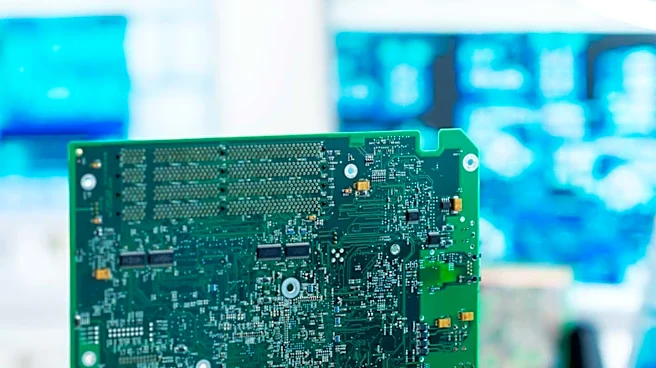
photonics technology, which utilizes advanced semiconductor manufacturing processes similar to those used for telecom and consumer electronics chips. The company's approach to quantum computing is distinct from classical computing, aiming to solve problems currently beyond the reach of even the most advanced supercomputers. PsiQuantum is also developing the necessary algorithms and software, collaborating with Fortune 500 companies like Lockheed Martin and Mercedes-Benz to prepare quantum solutions for real-world applications. The company's architecture benefits from photons' properties, such as immunity to heat and electromagnetic interference, and integration with existing cryogenic cooling and fiber-optic infrastructure.
Why It's Important?
The development of utility-scale quantum computers in the U.S., specifically in Chicago, signifies a major step forward in the nation's technological infrastructure and economic competitiveness. Quantum computing has the potential to revolutionize various foundational industries, including energy, pharmaceuticals, finance, agriculture, transportation, and materials science. By establishing these facilities, the U.S. is positioning itself at the forefront of a technology that is expected to be strategically and economically defining. This investment could lead to significant advancements in research and development, create high-skilled jobs, and attract further investment in the quantum technology sector. The collaboration with major corporations also indicates a clear path towards commercial viability and practical applications, which could translate into tangible benefits across multiple sectors, enhancing efficiency, innovation, and problem-solving capabilities.
What's Next?
Following the announcement, PsiQuantum will proceed with the build-out of its quantum computing facilities in Chicago. This will likely involve significant infrastructure development and the recruitment of specialized talent. The company will continue to develop algorithms and software in parallel, working with its commercial partners to integrate quantum solutions into their operations. The government funding suggests ongoing support and a national interest in accelerating quantum computing capabilities. Future developments may include further partnerships with academic institutions and industries to explore new applications and refine the technology. The success of these initial utility-scale deployments will be crucial in demonstrating the practical value of quantum computing and could influence future policy and investment decisions in the field.
Beyond the Headlines
The establishment of utility-scale quantum computers represents more than just a technological advancement; it signifies a fundamental shift in how complex problems can be approached and solved. This development could trigger a new era of scientific discovery and industrial innovation, potentially leading to breakthroughs in areas like drug discovery, climate modeling, and financial optimization that are currently intractable. The reliance on silicon photonics also highlights the importance of leveraging existing semiconductor manufacturing capabilities, bridging traditional tech industries with cutting-edge quantum science. Furthermore, the strategic importance of quantum computing could lead to geopolitical implications, as nations vie for leadership in this transformative technology, impacting national security and economic power dynamics. The ethical considerations surrounding such powerful computational capabilities will also become increasingly relevant as the technology matures.