






What's Happening?
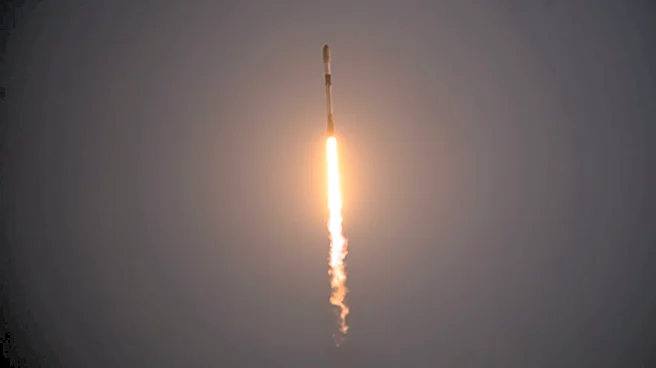
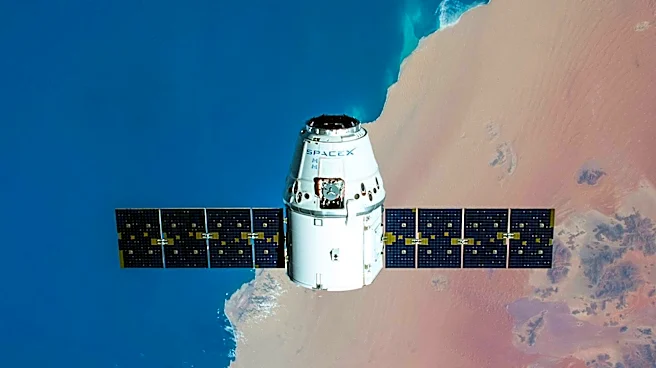
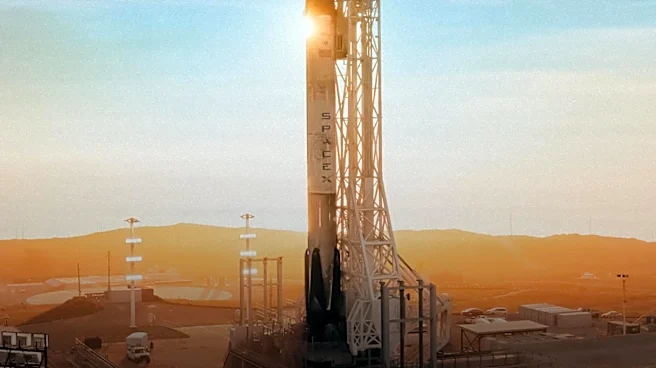
SpaceX successfully launched the Starlink Group 17-38 mission using a Falcon 9 Block 5 rocket from Vandenberg Space Force Base in California. The mission involved deploying a batch of Starlink satellites into orbit. The Falcon 9's first stage booster,
identified as B1093, completed its 16th flight and successfully landed on the autonomous spaceport drone ship 'Of Course I Still Love You' in the Pacific Ocean. This achievement underscores SpaceX's ongoing efforts to enhance the reusability of its rocket components, thereby reducing the costs associated with space launches. The mission is part of SpaceX's broader initiative to expand its Starlink satellite internet constellation, which aims to provide global internet coverage.
Why It's Important?
The successful launch and recovery of the Falcon 9 booster highlight SpaceX's continued advancements in reusable rocket technology, which is crucial for reducing the cost of space travel. This mission contributes to the expansion of the Starlink satellite network, which has significant implications for global internet access, particularly in remote and underserved areas. By enhancing connectivity, Starlink has the potential to impact various sectors, including education, healthcare, and emergency services, by providing reliable internet access. Additionally, the mission reinforces SpaceX's position as a leader in the commercial space industry, potentially influencing future collaborations and contracts with governmental and private entities.
What's Next?
SpaceX is expected to continue its aggressive launch schedule to further expand the Starlink constellation. The company plans to increase the frequency of its launches, aiming to deploy thousands of satellites to achieve near-global coverage. This expansion will likely involve further innovations in satellite technology and launch operations. Additionally, SpaceX's focus on reusability may lead to further cost reductions and efficiency improvements in its launch services. The success of the Starlink project could also prompt regulatory discussions regarding satellite traffic management and space debris mitigation, as the number of satellites in low Earth orbit continues to grow.