






What's Happening?
Jim Farley, CEO of Ford Motor Company, has reiterated Ford's commitment to scaling electric vehicles (EVs) with a disciplined approach, according to EVWorld.com. He clarified that the expansion of hybrid vehicle offerings is intended as a strategic 'bridge'
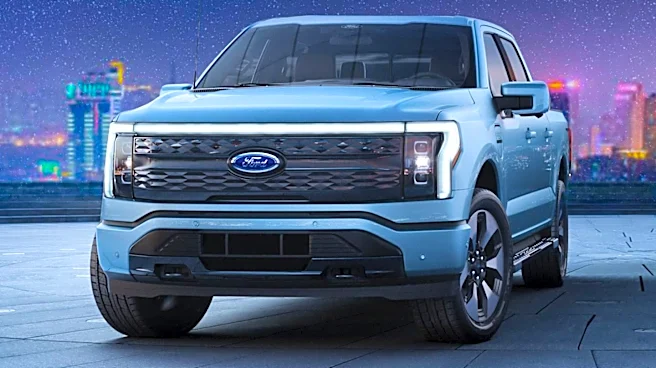
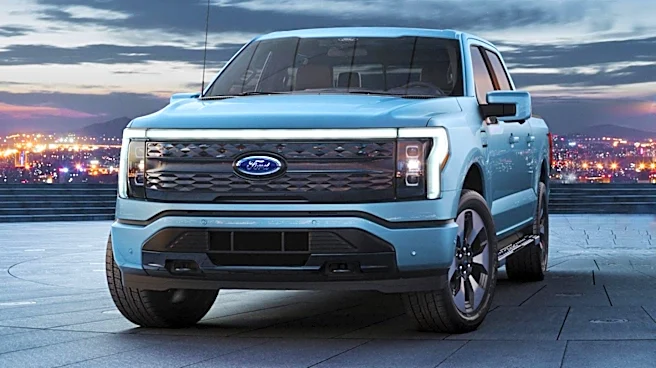
to a fully electric future, rather than a retreat from electrification. Ford's SEC filings reportedly show plans to invest over $10 billion in next-generation EV platforms. This strategy indicates a more measured pace for EV investments while continuing the production of existing EV models such as the Lightning, Mach-E, and E-Transit. The company aims to balance its long-term EV goals with current market demands and technological advancements, utilizing hybrids to facilitate the transition for consumers.
Why It's Important?
Ford's strategic approach to EV adoption, as articulated by CEO Jim Farley, has significant implications for the U.S. automotive industry and its transition to electric mobility. By positioning hybrids as a bridge, Ford acknowledges the current challenges in widespread EV adoption, such as charging infrastructure limitations and consumer range anxiety. This strategy could help maintain sales volume and market share while gradually educating consumers about electric powertrains. The substantial investment in next-generation EV platforms signals Ford's long-term commitment to electrification, ensuring its competitiveness against both traditional rivals and emerging EV manufacturers. This balanced approach could also influence other legacy automakers to adopt similar strategies, potentially slowing the immediate pace of full EV transition but ensuring a more sustainable and consumer-friendly shift in the long run. The success of this strategy will impact job creation, supply chain development, and the overall environmental footprint of the U.S. transportation sector.
What's Next?
In the coming years, Ford is expected to continue rolling out new hybrid models and further developing its next-generation EV platforms, supported by the announced $10 billion investment. Consumers can anticipate a wider range of hybrid options as Ford aims to make the transition to electric vehicles more accessible. The company will likely focus on optimizing its EV production processes and supply chains to achieve greater efficiency and cost-effectiveness. Industry analysts will closely monitor Ford's sales figures for both hybrids and EVs to assess the effectiveness of this 'bridge' strategy. Competitors may adjust their own electrification plans in response to Ford's disciplined approach, potentially leading to a more diversified market for electrified vehicles in the U.S. The development of charging infrastructure and battery technology will also play a crucial role in how quickly Ford and the broader industry can accelerate their EV scaling efforts.
Beyond the Headlines
Ford's strategy reflects a broader industry recognition that the path to full electrification is complex and requires adaptability. The emphasis on hybrids as a transitional technology highlights the practical realities of consumer preferences and infrastructure readiness, moving beyond an 'all-or-nothing' approach to EVs. This could lead to a more gradual but ultimately more successful shift in the automotive market, avoiding potential consumer backlash or economic disruptions that could arise from an overly aggressive EV mandate. The long-term implications include a potential redefinition of 'green' vehicles, where hybrids are seen as a crucial step rather than a compromise. This approach also underscores the importance of diverse technological solutions in addressing climate change and energy independence, acknowledging that a single solution may not fit all needs or timelines. The success of Ford's strategy could set a precedent for how large industrial companies manage complex technological transitions in a dynamic market.