



What's Happening?
Jim Cramer, host of CNBC's "Mad Money," has indicated his intention to purchase shares of Advanced Micro Devices (AMD) after the stock experienced a significant 20% decline over two days. This drop followed a report from short seller Hunterbrook Media,
which alleged that a Chinese server manufacturer, IEIT Systems, continued to use newer AMD firmware despite being blacklisted by the Commerce Department in March 2025. Hunterbrook's report, titled "AMD Has Its Own China Problem," suggested potential issues with AMD's business practices related to China. However, Hunterbrook also stated that its findings do not confirm an export-law violation. AMD has refuted the claims, asserting they "misrepresent AMD's business practices and relationships." Cramer characterized the report as a "hitjob" and views the stock's decline as a buying opportunity, referring to it as a "discount."
Why It's Important?
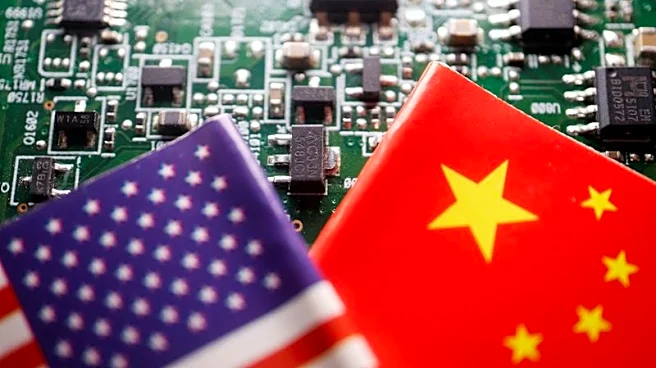
This development is significant for investors and the technology sector, particularly in the context of U.S.-China trade relations and intellectual property concerns. The allegations, even if unproven, highlight the complexities and risks faced by U.S. technology companies operating in the Chinese market, especially those dealing with sensitive technologies like server CPUs and GPUs. A 20% drop in AMD's stock price, a major player in the semiconductor industry, can create volatility across the market and impact investor confidence in other tech firms with significant exposure to China. Jim Cramer's public stance to buy the dip could influence retail investors, potentially stabilizing or boosting AMD's stock in the short term, while also drawing further attention to the debate surrounding the validity of short-seller reports and their market impact.
What's Next?
The immediate focus will be on AMD's fourth-quarter results, which are expected to provide further clarity on the company's financial health and growth trajectory. AMD has guided for approximately $17 billion in revenue, plus or minus 3%, and achieving this target would reinforce the company's growth prospects. Additionally, January 10 is a key date to watch, as it marks the end of a pause on a tighter blacklist rule from Washington, which could introduce new regulatory challenges for companies like AMD. The ongoing scrutiny of U.S. technology exports to China and the potential for further regulatory actions will continue to shape the investment landscape for semiconductor companies.
Beyond the Headlines
The incident underscores the broader geopolitical tensions impacting global supply chains and technology development. The U.S. government's efforts to restrict the flow of advanced technology to certain Chinese entities create a complex operating environment for multinational corporations. This situation also raises questions about the ethics and influence of short-seller reports, particularly when they are accompanied by significant market movements. The debate over whether such reports are legitimate market corrections or manipulative tactics will likely continue, influencing regulatory discussions around market transparency and investor protection. The long-term implications could include a re-evaluation of global manufacturing and sales strategies for U.S. tech companies, potentially leading to a more fragmented global technology market.